
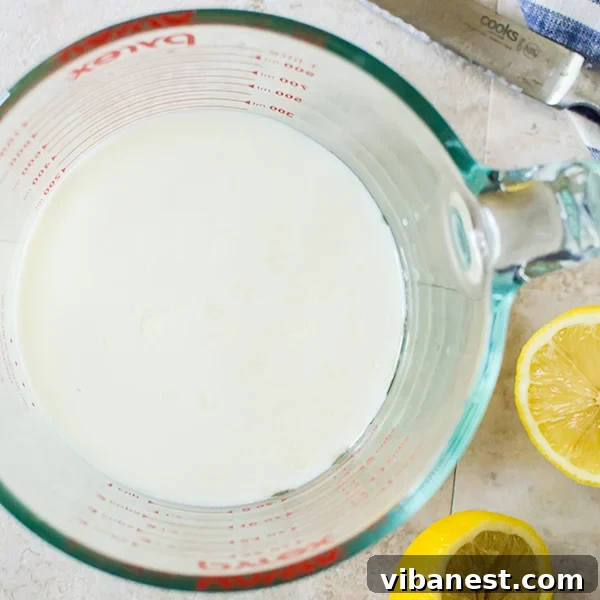
Never Run Out: Your Ultimate Guide to Easy Homemade Buttermilk Substitute
Picture this: You’re halfway through preparing a batch of fluffy pancakes, tender biscuits, or a moist cake, and the recipe calls for buttermilk. You confidently open the fridge, only to find… nothing. It’s a common kitchen dilemma that can put a sudden halt to your baking plans. But what if we told you that running out of buttermilk doesn’t have to be a baking catastrophe? In fact, you can effortlessly whip up a perfect buttermilk substitute right in your own kitchen with just two simple ingredients you likely already have on hand.
Buttermilk is a star ingredient in many recipes, cherished for its ability to add a delicate tang, incredible tenderness, and a crucial acidic component that reacts with leavening agents like baking soda and baking powder. This reaction is what creates those desirable light and airy textures in your baked goods. While store-bought buttermilk offers a specific thickness and fermented flavor, a homemade substitute serves beautifully in almost all baking applications, ensuring your recipes turn out just as delicious.
The Simple Science Behind Your DIY Buttermilk
Making your own buttermilk substitute is remarkably straightforward and relies on a basic chemical reaction. At its core, buttermilk is milk that has been acidified. The acid causes the proteins in the milk to curdle and thicken slightly, creating that signature tangy flavor and unique texture. While traditional buttermilk is a fermented dairy product, our quick homemade version mimics its essential properties, making it an excellent functional stand-in for most recipes.
You might be thinking, “sour milk sounds unappetizing!” But rest assured, this controlled acidification is precisely what gives buttermilk its magic. The main difference you’ll notice compared to store-bought buttermilk is that the homemade version won’t achieve the same thick, creamy consistency. It will be slightly thinner, more akin to regular milk with very fine curds. However, for baking, where the acid-milk reaction is paramount, this textural difference is negligible and won’t impact your final product’s quality.
Choosing Your Ingredients: Milk and Acid for the Perfect Substitute
The beauty of this homemade trick lies in its simplicity and versatility. You only need two key components:
Best Milk Options for Your Buttermilk Substitute
- Dairy Milk: Most dairy milks work wonderfully. Whole milk will yield a slightly richer substitute, but 2%, 1%, or even skim milk are perfectly acceptable. The fat content primarily affects the richness of your final baked good, not the acidification process itself.
- Non-Dairy Alternatives: If you’re dairy-free, don’t despair! You can often make a substitute using non-dairy milks like soy milk, almond milk, or oat milk. Just be aware that the curdling may not be as pronounced, and the flavor might vary slightly depending on the brand and type of milk. Ensure your non-dairy milk is unsweetened and unflavored for best results in savory and sweet baking.
Selecting Your Acid: Lemon Juice vs. Vinegar
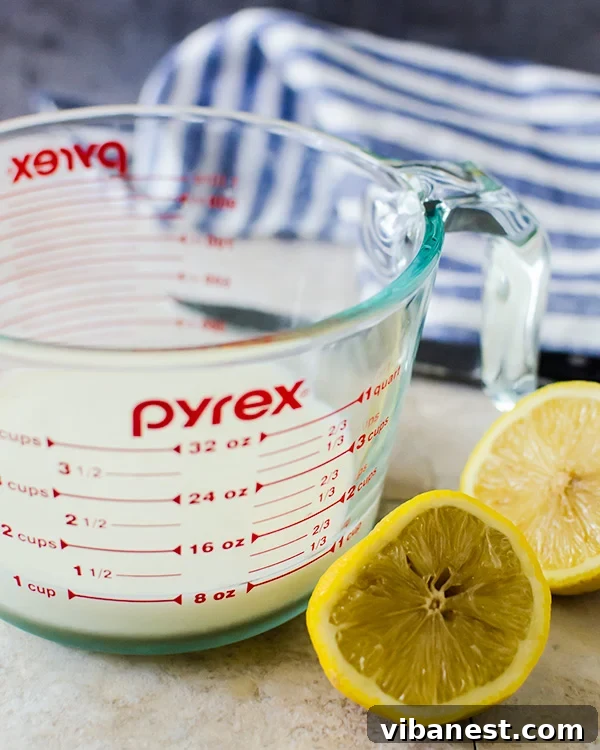
The acid is the catalyst that transforms your regular milk into a buttermilk substitute. Both lemon juice and white vinegar are excellent choices:
- Lemon Juice: Freshly squeezed lemon juice is ideal, offering a bright, clean tang. Bottled lemon juice also works well and is a convenient pantry staple.
- Distilled White Vinegar: This is another fantastic option, providing the necessary acidity without imparting a strong flavor to your baked goods. It’s often more readily available than fresh lemons.
- Other Acids: While less common, apple cider vinegar can also be used, though it might lend a slightly different flavor profile. Cream of Tartar can also work; use 1 ¾ teaspoons per cup of milk, dissolving it in a tablespoon or two of milk before mixing with the rest.
The best part about making buttermilk at home is that you will always have the exact amount you need, eliminating waste. Simply mix them together, give it a few minutes to work its magic, and you’re ready to go!
Step-by-Step Guide to Making Homemade Buttermilk
This simple recipe is designed for ease and efficiency, ensuring you’re never more than 5 minutes away from having the buttermilk you need.
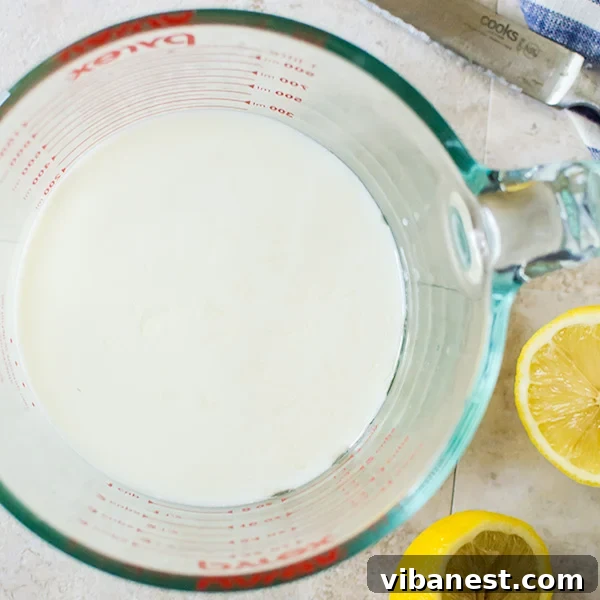
INGREDIENTS
- 1 cup (240ml) milk (dairy or unsweetened non-dairy)
- 1 1/2 teaspoons (7.5ml) fresh lemon juice or distilled white vinegar
DIRECTIONS
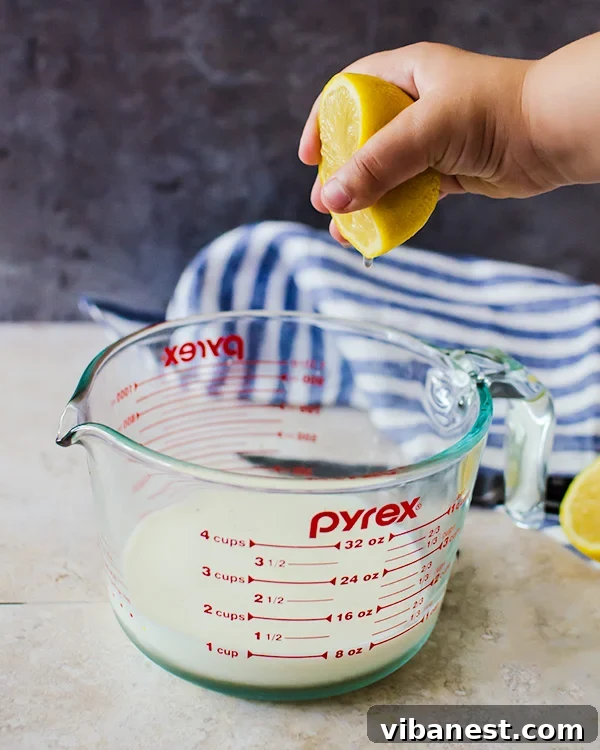
- Combine Ingredients: In a small bowl or measuring cup, gently combine the milk and your chosen acid (lemon juice or vinegar). Stir briefly to ensure the acid is evenly distributed throughout the milk.
- Activate the Acid: Let the mixture sit undisturbed at room temperature for five minutes. During this time, you’ll observe the milk beginning to thicken slightly and small curds may form. This is a clear indication that the acid is working its magic, transforming your regular milk into a buttermilk substitute.
- Immediate Use: Once the five minutes are up, your homemade buttermilk substitute is ready to use! Incorporate it immediately into your recipe, exactly as you would use store-bought buttermilk. It’s perfectly suited for enhancing the texture and flavor of pancakes, quick breads, muffins, and other baked goods.
- Important Note on Storage: Unlike store-bought buttermilk, which has a longer shelf life due to its fermentation process, this homemade substitute does not store well. It’s designed for immediate use. While it can sit on the counter for about an hour after preparation, it’s best to use it as soon as it’s ready. Do not plan on storing it in the fridge for later use, as its quality will rapidly decline.
Tips for the Perfect Homemade Buttermilk Substitute
- Room Temperature Milk: While not strictly necessary, using milk that’s closer to room temperature can sometimes help the curdling process along a little faster and more effectively.
- Accurate Measurements: Precision matters here. Too little acid, and the milk won’t curdle sufficiently; too much, and the flavor might become overly sharp. Stick to the recommended ratio.
- Observe the Curds: Don’t expect thick, yogurt-like consistency. The milk will develop tiny visible curds and a slightly thickened, cloudy appearance. This is exactly what you’re looking for.
- Stir Before Using: Give your homemade buttermilk a quick stir right before adding it to your other ingredients to ensure everything is well incorporated.
When to Use Homemade Buttermilk (and When Not To)
Understanding the strengths and limitations of your homemade substitute will help you achieve the best results in your kitchen.
Ideal Applications for Your Homemade Buttermilk
This substitute shines in recipes where buttermilk’s primary role is to provide acidity for leavening and to tenderize the crumb. It’s absolutely perfect for:
- Pancakes and Waffles: Expect incredibly fluffy results with that classic tangy buttermilk flavor.
- Biscuits and Scones: The acid reacts with baking soda to create a light, flaky texture.
- Quick Breads and Muffins: Think banana bread, cornbread, or blueberry muffins – all benefit from buttermilk’s tenderizing effects.
- Cakes and Cupcakes: Ensures a moist crumb and a subtle tang that complements sweet flavors.
- Fried Chicken Brine: A great way to tenderize and flavor chicken before frying.
Situations to Avoid When Using Homemade Buttermilk
While incredibly versatile, there are a few instances where the substitute might not perform as well as the real deal:
- Dressings and Sauces: Because homemade buttermilk isn’t as thick or creamy as store-bought, it won’t contribute the same body or mouthfeel to salad dressings or creamy sauces. The texture will be too thin.
- Direct Consumption: Due to its thinner consistency and simpler flavor profile, homemade buttermilk substitute isn’t typically recommended for drinking plain, unlike some traditional buttermilks.
Homemade Buttermilk vs. Store-Bought: What’s the Difference?
It’s important to differentiate between traditional store-bought buttermilk and our quick homemade substitute. Traditional buttermilk is a cultured product, meaning it’s made by adding a bacterial culture to milk, which ferments the lactose and produces lactic acid. This process gives it a thicker consistency, a more complex, deeply tangy flavor, and a longer shelf life.
Our homemade version, on the other hand, is an “acidified milk” rather than a fermented one. While it provides the crucial acidity needed for baking and replicates the tenderizing effects, it won’t have the same robust, fermented flavor or the thicker body of its commercial counterpart. For baking purposes, however, this distinction rarely matters. The acid in your homemade substitute will react beautifully with your leavening agents, delivering the desired rise and tenderness.
Common Questions About Buttermilk Substitutes (FAQ)
Can I store homemade buttermilk for later use?
No, this homemade buttermilk substitute is best used immediately after the 5-minute activation period. It does not contain the cultures that give commercial buttermilk its shelf stability. While it’s okay to let it sit on the counter for up to an hour if you get sidetracked, it should not be stored in the refrigerator for extended periods, as its quality will deteriorate quickly.
What if my milk doesn’t curdle after 5 minutes?
There are a few potential reasons: your milk might be too cold (warm it slightly to room temperature), or you might not have added enough acid. Ensure your lemon juice or vinegar is fresh and potent. If you see no change, add another half teaspoon of acid and wait a few more minutes.
Can I use other types of vinegar?
While distilled white vinegar is preferred for its neutral flavor, you can use apple cider vinegar. Be aware that apple cider vinegar has a stronger, fruitier flavor that might be detectable in delicate baked goods. Avoid dark vinegars like balsamic, which will drastically alter the color and flavor.
What if I don’t have lemon juice or vinegar?
Another option is cream of tartar. Mix 1 ¾ teaspoons of cream of tartar with 1 cup of milk. It sometimes works best to dissolve the cream of tartar in a tablespoon of milk first to prevent lumps, then combine with the remaining milk. Let it sit for 5-10 minutes.
Can I use this substitute in non-baking recipes like creamy soups or marinades?
For recipes where buttermilk’s specific texture and fermented flavor are crucial, especially in raw applications like soups or marinades that aren’t cooked thoroughly, the homemade substitute might fall short. Its primary strength is in baked goods where the acid-leavening reaction is key.
Conclusion: Your Kitchen’s Secret Weapon
Never again let an empty carton of buttermilk derail your baking ambitions. With this simple, 5-minute method, you have a reliable and effective buttermilk substitute at your fingertips. It’s an easy kitchen hack that saves time, reduces waste, and empowers you to bake your favorite treats whenever inspiration strikes. So, the next time a recipe calls for that elusive ingredient, confidently reach for your milk and a splash of lemon juice or vinegar, and get ready to enjoy perfectly tender and tangy results!