

Authentic Margherita Pizza: A Timeless Italian Classic
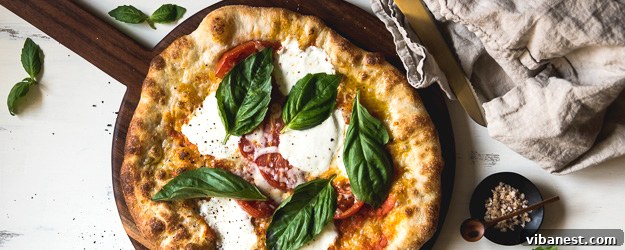
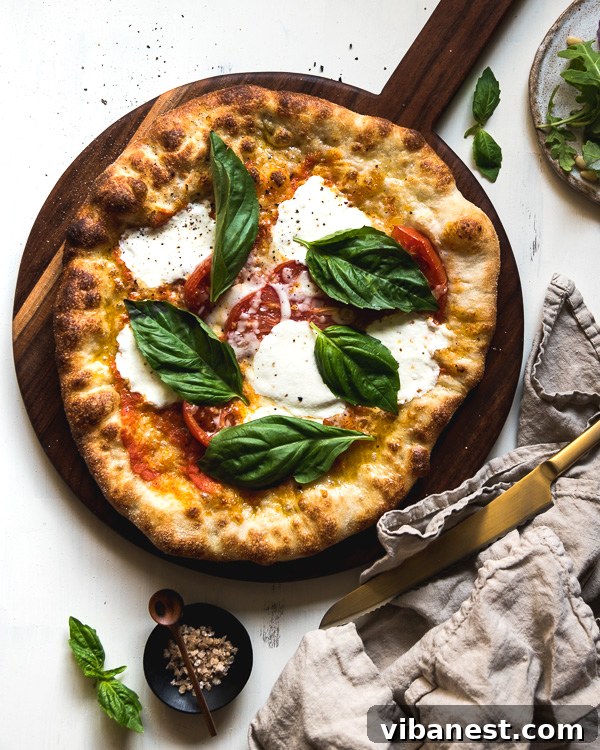
When one imagines the quintessential Italian pizza, the image that invariably comes to mind is the iconic Margherita. It’s more than just a dish; it’s a culinary masterpiece, proudly flaunting the vibrant colors of the Italian flag: the pristine white of fresh mozzarella, the luscious red of ripe tomatoes, and the bright green of fragrant basil leaves. All these simple yet powerful flavors unite harmoniously atop a perfectly thin and crispy crust. This humble combination of pure, high-quality ingredients transcends mere individual components, culminating in an end result that is infinitely more satisfying and profoundly delicious than the sum of its parts.
The beauty of Margherita pizza lies in its elegant simplicity, allowing each ingredient to truly shine. Unlike more complex pizzas laden with numerous toppings, the Margherita demands perfection from its core elements. It’s a testament to the Italian philosophy that extraordinary food doesn’t require an overwhelming array of components, but rather a thoughtful selection of the finest quality ingredients handled with care and respect. Embarking on the journey to create your own Margherita pizza at home is an incredibly rewarding experience, offering not just a meal, but a taste of genuine Italian tradition.
The Storied Origin of Pizza Margherita
To truly appreciate the Margherita, one must delve into its fascinating history. Legend has it that the pizza Margherita was created in 1889 by pizzaiolo Raffaele Esposito from Pizzeria Brandi in Naples. He was commissioned to prepare a pizza for Queen Margherita of Savoy, during her visit to Naples with King Umberto I. To honor the queen and represent the newly unified Italy, Esposito crafted a pizza specifically designed to reflect the colors of the Italian flag: red (tomatoes), white (mozzarella), and green (basil). The queen was reportedly delighted, and thus, a legend was born. This simple yet profound culinary creation quickly became a beloved classic, cementing its place not only in Italian culture but in the global gastronomic landscape.
This historical context underscores the deep cultural significance of the Margherita. It’s not just a recipe; it’s a piece of history, a symbol of national pride, and a benchmark for all other pizzas. Understanding its origins helps in appreciating the meticulous attention to detail required to reproduce its authentic flavor. Every element, from the choice of tomatoes to the type of cheese, contributes to this rich legacy, making each bite a connection to centuries of Italian culinary tradition.
Crafting Perfection: Essential Ingredients for an Authentic Margherita
While the recipe for Margherita pizza appears deceptively simple, the secret to its unparalleled taste lies in the quality and freshness of its few core ingredients. This recipe is designed to be accessible and straightforward, allowing for flexibility in ingredient sourcing. Whether you meticulously craft your mozzarella and pizza dough from scratch or opt for high-quality store-bought alternatives, the outcome promises to be a delightful treat. Naturally, utilizing finer and/or handmade ingredients will elevate your pizza to even greater heights of flavor. The critical elements for an exceptional Margherita pizza are achieving a crust that is as thin as possible and an oven that reaches the highest feasible temperature. This methodology ensures a rapid cook time, resulting in a crust that crisps perfectly all over and puffs up delicately at the sides, cheese that is just melted and gooey, and tomato slices that are gently roasted to perfection.
The Foundation: The Pizza Dough
The crust is the backbone of any great pizza, and for a Margherita, it needs to be thin, airy, and slightly chewy with a crisp exterior. Traditionally, authentic Neapolitan pizza dough is made with “00” flour, water, salt, and yeast, undergoing a slow fermentation process that develops incredible flavor and texture. While making dough from scratch is a rewarding experience, high-quality pre-mixed raw pizza dough can also yield excellent results. The key is to stretch it as thin as possible without tearing, creating a delicate base that will cook quickly and evenly in a hot oven.
The Heart: The Tomato Sauce
For Margherita, the sauce is never cooked beforehand; instead, it’s a simple, fresh preparation that highlights the natural sweetness and acidity of the tomatoes. The gold standard is San Marzano tomatoes, known for their balanced flavor and fewer seeds. Whether you use whole peeled or diced canned tomatoes, draining them thoroughly and then pureeing them with a touch of extra virgin olive oil, salt, and pepper is all that’s needed. This minimalist approach ensures the vibrant, unadulterated taste of the tomato shines through, complementing rather than overwhelming the other ingredients.
The Soul: Fresh Mozzarella
Authentic Margherita demands fresh mozzarella, typically “fior di latte” (cow’s milk mozzarella) or, for a truly luxurious experience, mozzarella di bufala (buffalo mozzarella). The brined variety, often found in water, is ideal. It’s crucial to drain and gently pat dry the mozzarella thoroughly before placing it on the pizza. This prevents excess moisture from making the crust soggy. The fresh mozzarella melts into creamy pockets of goodness, providing a delightful contrast to the crisp crust and tangy tomatoes.
The Fragrance: Fresh Basil
Basil is not just a garnish; it’s an integral flavor component. Its bright, peppery, slightly sweet aroma cuts through the richness of the cheese and the acidity of the tomato, adding a fresh, herbaceous note. Always use fresh basil leaves, ideally added in two stages: some before baking to infuse flavor and some after baking to preserve their vibrant color and fresh aroma. Roughly tearing the leaves releases their essential oils more effectively than neatly chopping them.
The Finishing Touch: Extra Virgin Olive Oil
A drizzle of high-quality extra virgin olive oil, both before and sometimes after baking, adds a fruity depth and a luxurious sheen to the pizza. It enhances the overall flavor profile, contributing to the rich, authentic taste that defines a classic Margherita.
Mastering the Technique: Achieving Margherita Perfection at Home
The success of your homemade Margherita pizza hinges significantly on your technique, particularly concerning oven temperature and dough handling. It’s a delicate balance of speed and precision that results in the perfect crust and perfectly cooked toppings. Don’t be intimidated; with a few key practices, you can consistently achieve exceptional results that rival your favorite pizzeria.
The Power of High Heat: The Oven is Your Ally
One of the most crucial elements in baking a truly great Margherita is heat. Professional pizza ovens reach temperatures upwards of 900°F (480°C), allowing pizzas to cook in mere minutes. While home ovens can’t quite match that intensity, setting yours to its highest possible temperature (often 500-550°F or 260-290°C) is paramount. Furthermore, preheating a pizza stone or heavy baking steel on the middle rack for at least an hour is non-negotiable. This creates a scorching hot surface that mimics the floor of a brick oven, instantly crisping the bottom of the crust and initiating that desirable “oven spring” that results in a light, airy texture.
Dough Handling and Stretching: A Gentle Art
Working with pizza dough can seem daunting, but it’s a tactile and rewarding process. Dust your work surface and hands lightly with flour, then gently coax your dough into a round shape. Avoid using a rolling pin if possible, as it can press out the air bubbles essential for a light crust. Instead, use your fingertips to press from the center outwards, then lift and stretch the dough, letting gravity assist you in forming a thin, even circle. Aim for a diameter of about 12 inches for a standard home pizza. The thinner the crust, the quicker it cooks and the crispier it becomes.
Assembling Your Masterpiece: Balance is Key
Once your dough is stretched and placed on a well-floured pizza peel (or parchment paper if you’re using a baking sheet), it’s time for assembly. Spread the simple tomato sauce evenly, leaving about a ½-inch border around the edge for the crust to rise. If using fresh tomato slices, arrange them thoughtfully. Drizzle a small amount of olive oil before scattering the torn pieces of fresh mozzarella. Remember, less is more with Margherita – resist the urge to overload. Finally, place about half of the fresh basil leaves on top before baking. This initial basil will impart a deeper flavor, while the second addition post-baking will provide freshness and color.
The Bake: Watchful Waiting
Carefully slide your assembled pizza onto the preheated stone or steel in the oven. This is where the magic happens quickly! Watch through the oven door as the crust begins to puff and brown, the cheese melts and bubbles, and the tomato edges slightly caramelize. Baking times will vary depending on your oven’s temperature, but typically range from 4 to 8 minutes. Don’t walk away! Once the crust is golden brown and the cheese is beautifully melted with a few caramelized spots, it’s ready. Promptly transfer the pizza to a cutting board to cool for about 5 minutes. This crucial cooling period allows the cheese to set slightly, preventing it from sliding off when sliced and ensuring every piece holds its structural integrity.

Authentic Margherita Pizza Recipe
SAUCE INGREDIENTS
- 1 (14.5 oz) can San Marzano tomatoes (whole peeled or diced), thoroughly drained
- 1 tablespoon extra-virgin olive oil, or to taste
- Salt and freshly ground black pepper to taste
PIZZA INGREDIENTS
- 1 (12-inch) round of high-quality pizza dough, perfectly stretched
- 3 tablespoons prepared tomato sauce
- (Optional) 1/2 fresh ripe tomato, thinly sliced
- Extra-virgin olive oil, for drizzling
- 2 3/4 ounces fresh (brined) mozzarella, drained and torn into large pieces
- 6 to 8 fresh basil leaves, roughly torn
DIRECTIONS
- Prepare the Sauce: In a bowl, combine the thoroughly drained canned tomatoes, 1 tablespoon of extra-virgin olive oil, and a generous pinch of salt and black pepper. Blend these ingredients with an immersion blender or a food processor until the mixture is a smooth puree. Taste the sauce and adjust seasoning as needed, adding more olive oil, salt, or black pepper if desired. Blend again briefly to incorporate any added seasonings. Any leftover sauce can be stored in an airtight container in the refrigerator for up to a week, or frozen for up to 3 months.
- Preheat the Oven: Place a pizza stone or a heavy-duty baking steel on the middle rack of your oven. Turn the oven to its highest possible temperature setting (usually 500-550°F / 260-290°C). Allow the oven and stone/steel to preheat for at least one full hour to ensure it is thoroughly heated through.
- Assemble the Pizza Base: Lightly dust a pizza peel with flour or cornmeal to prevent sticking. Carefully place your stretched pizza dough round on top of the prepared peel. Using the back of a spoon, evenly spread 3 tablespoons of the prepared tomato sauce over the center of the dough, leaving a clear border of approximately 1/2 inch from the edge. If you are using fresh tomato slices, arrange them decoratively over the sauce at this stage.
- Add Toppings: Drizzle a small amount of extra-virgin olive oil over the sauce and any tomato slices. Break the drained fresh mozzarella into large, irregular pieces and gently distribute them over the sauce. Finally, scatter half of the roughly torn fresh basil leaves over the cheese.
- Bake the Pizza: With a swift and confident motion, slide the assembled pizza from the peel directly onto the preheated pizza stone or baking steel in the oven. Bake until the crust is beautifully golden brown, puffed around the edges, and the cheese is fully melted and bubbling with some caramelized spots. This typically takes between 4 to 8 minutes, depending on your oven’s temperature.
- Serve: Carefully transfer the baked pizza from the oven to a cutting board. Allow it to cool for approximately 5 minutes; this crucial step helps the cheese set properly, preventing it from sliding off when sliced. Decorate the pizza with the remaining fresh basil leaves, then slice and serve immediately to enjoy its exquisite flavors.
Tips for Margherita Pizza Perfection
- Don’t Overload: The beauty of Margherita is its simplicity. Too much sauce or cheese can make the crust soggy. Stick to the recommended quantities.
- Dough Temperature: Use dough that’s at room temperature for easier stretching and better rise.
- Freshness is Key: Always prioritize the freshest ingredients, especially for basil and mozzarella.
- Practice Your Peel Technique: If using a pizza peel, a quick, confident motion is essential. A slight shake of the peel to ensure the pizza isn’t sticking before sliding it into the oven can prevent mishaps.
- Experiment with “00” Flour: For those serious about authentic Neapolitan crust, investing in “00” flour can make a noticeable difference in texture and lightness.
- No Pizza Stone? No Problem: A heavy-duty baking sheet preheated in the oven will work, though a stone or steel provides superior heat retention and crisping.
Conclusion: The Enduring Charm of Homemade Margherita
Making an authentic Margherita pizza at home is more than just following a recipe; it’s an experience that connects you to centuries of Italian culinary heritage. It’s about appreciating the power of a few perfect ingredients working in harmony, elevated by careful technique and a passion for flavor. The aroma that fills your kitchen, the sight of the bubbling cheese, and the first bite of that perfectly crisp yet tender crust — all contribute to an unforgettable dining experience. Whether for a casual weeknight dinner or a special gathering, homemade Margherita pizza is a testament to the fact that sometimes, the simplest things are indeed the most satisfying and profoundly delicious. So, gather your ingredients, fire up your oven, and prepare to delight in the timeless charm of this Italian classic.
Recipe adapted from
NY Times