
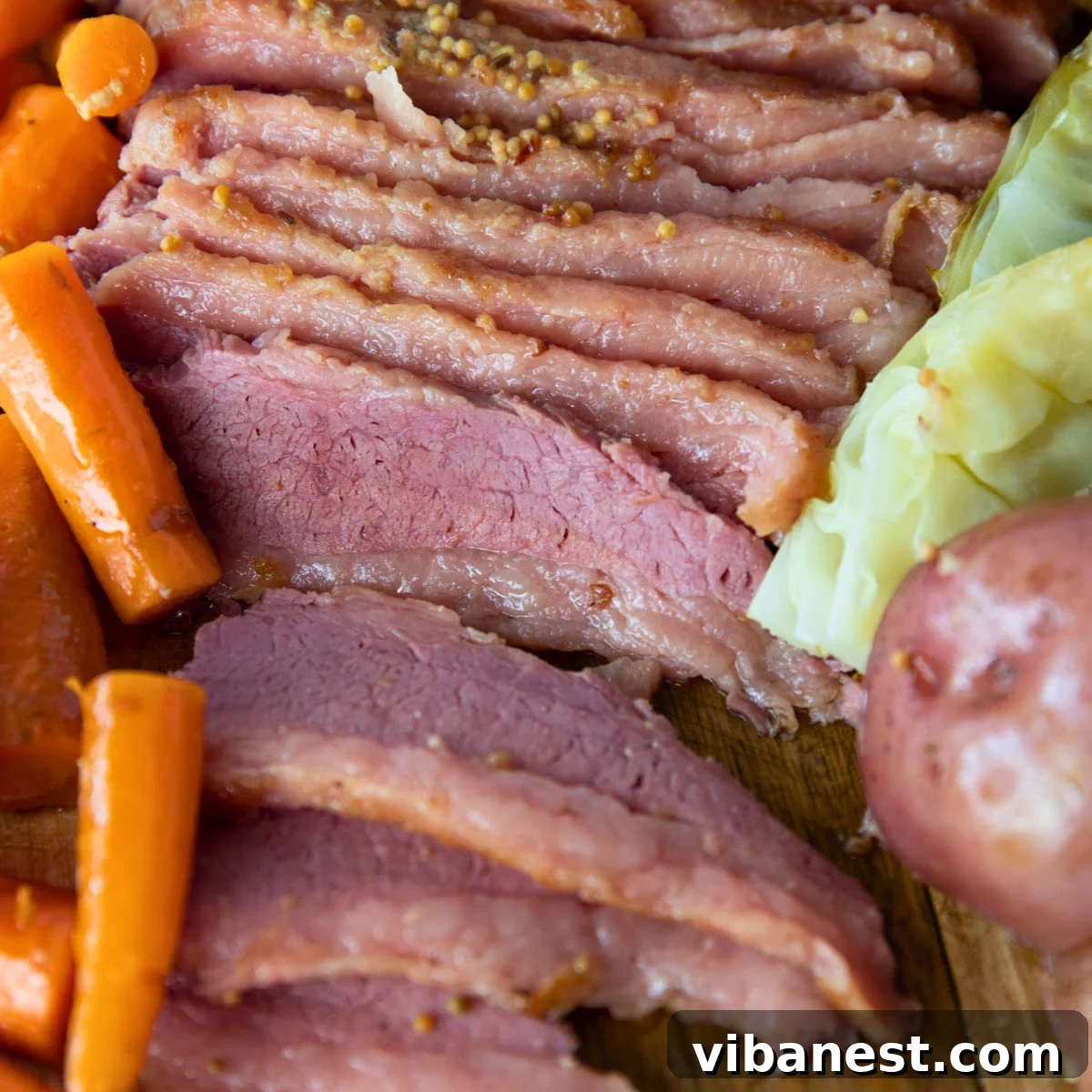
Experience the ultimate St. Patrick’s Day feast with this guide on how to prepare the most succulent Corned Beef and Cabbage right in your oven! This comprehensive recipe delivers perfectly tender corned beef, complemented by flavorful cabbage, carrots, and potatoes, with an optional homemade horseradish sauce to elevate your meal.
Corned beef and cabbage is a cherished tradition, a culinary cornerstone of St. Patrick’s Day celebrations across many homes. While often reserved for this special occasion, its hearty, comforting appeal makes it a dish worth savoring more frequently. Imagine fork-tender corned beef brisket, infused with aromatic spices, paired with sweet onions, robust carrots, and soft potatoes – it’s a symphony of flavors and textures. And let’s not overlook the exquisite potential of the leftovers, which can be transformed into magnificent Reuben sandwiches or a variety of other delicious meals. This year, discover the unmatched ease and incredible flavor of preparing this classic dish in the oven.
Forget the traditional stovetop boil; we’re about to transform your St. Patrick’s Day dinner into an effortless, flavor-packed oven-roasted masterpiece.
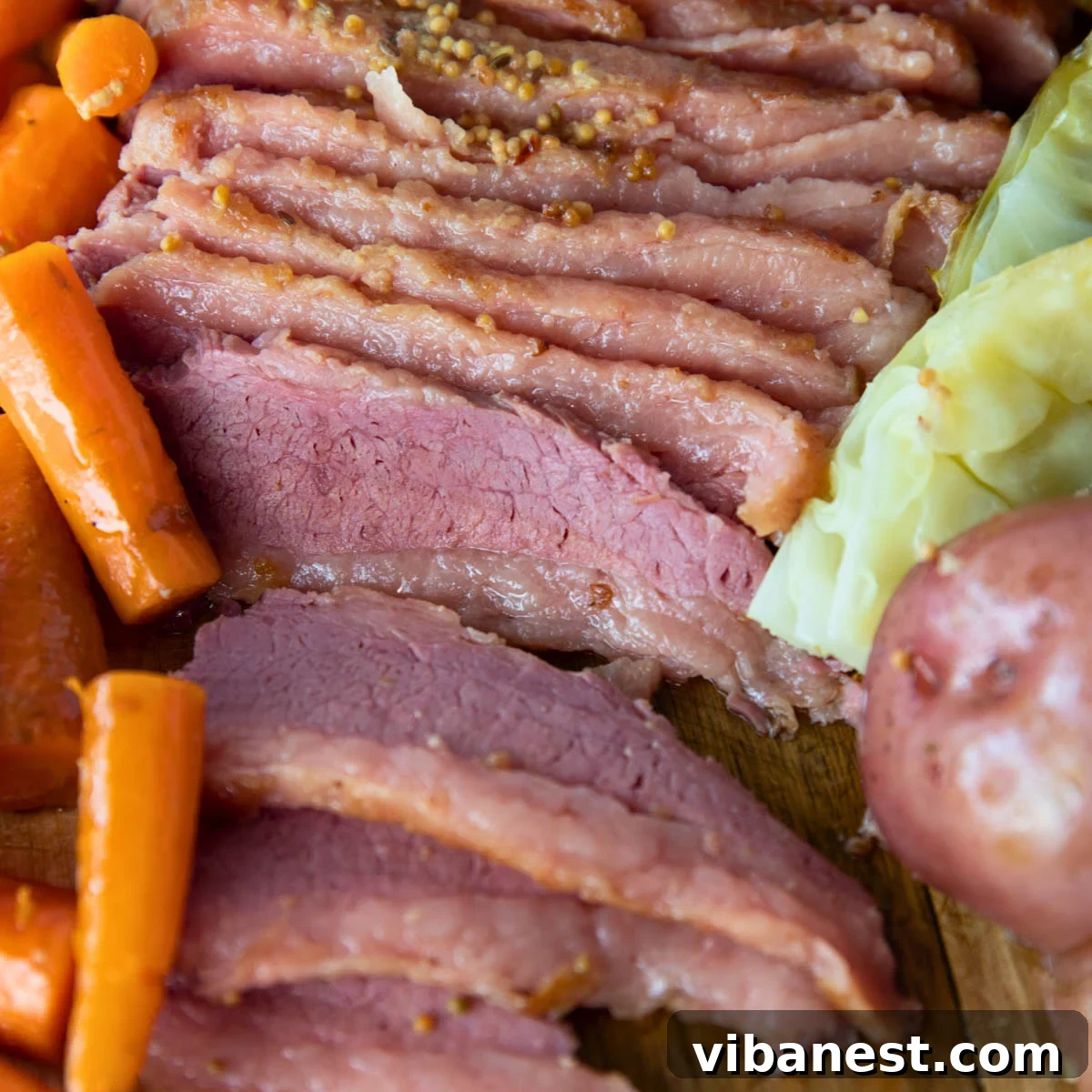
The Ultimate Oven-Baked Corned Beef and Cabbage Recipe for St. Patrick’s Day
While many traditional recipes call for boiling corned beef brisket, I’ve found that roasting it in the oven offers a vastly superior flavor and texture. The slow, steady heat of the oven, combined with a flavorful liquid like Guinness beer or rich beef broth, creates an incredibly tender brisket with a delightful savory crust. This method also allows the vegetables to cook alongside the meat, absorbing all the wonderful flavors and making for an easier, one-pan meal. Let’s dive into the detailed steps to perfect your oven-roasted corned beef and cabbage.
- Preheat Oven to 325°F (160°C): A low and slow cooking temperature is crucial for breaking down the tough fibers in the brisket, ensuring a melt-in-your-mouth result. Give your oven ample time to reach and maintain this temperature for consistent cooking.
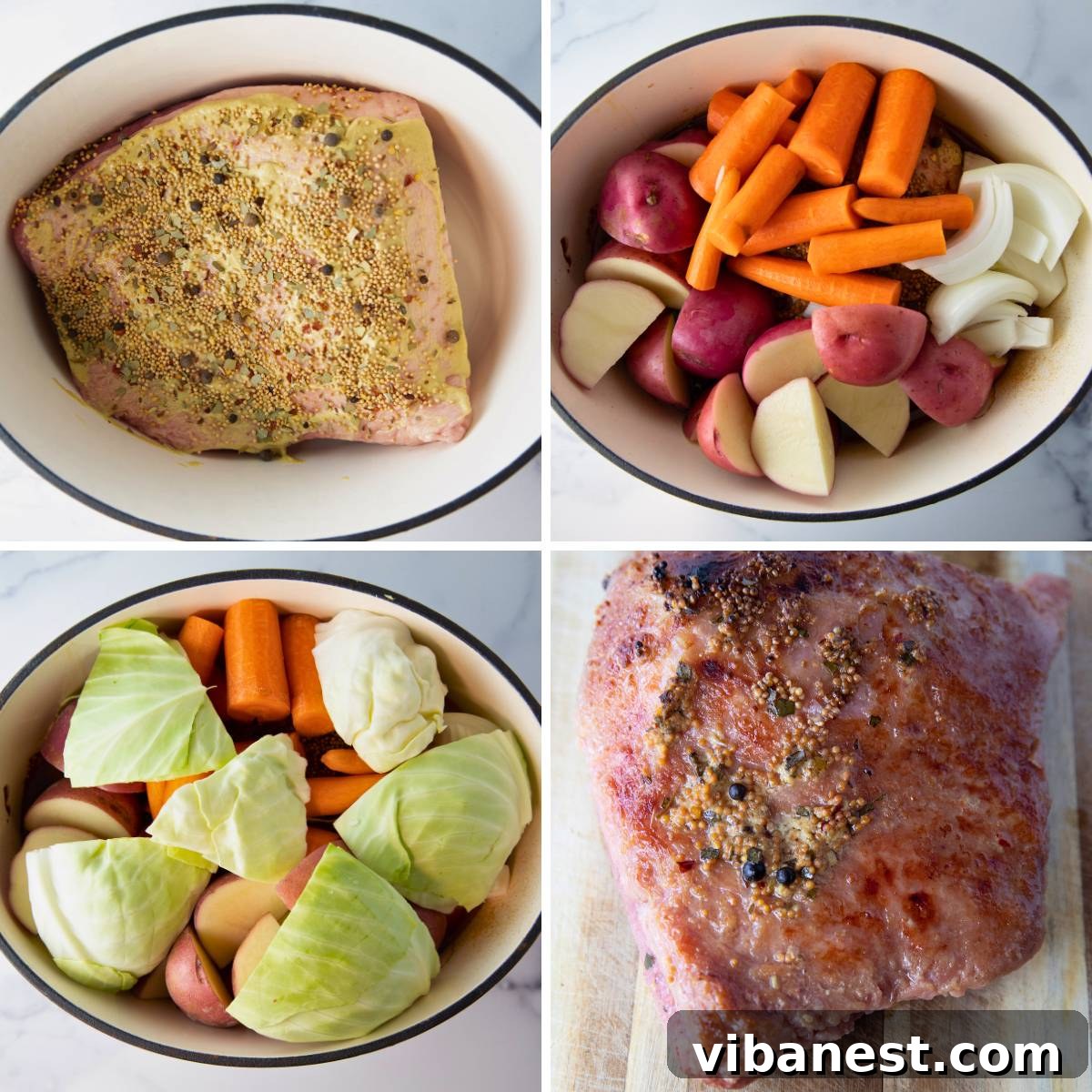
- Rinse and Prepare the Brisket: Corned beef typically comes pre-brined, which is why it’s essential to thoroughly rinse any excess brine from the meat under cold running water. This step helps to prevent the final dish from being overly salty. After rinsing, pat the brisket completely dry with paper towels. A dry surface allows for better seasoning adherence and helps to develop a slight crust during roasting. Place the brisket in a sturdy Dutch oven or a deep roasting pan, ensuring the fat cap faces upwards. The fat cap will render down during cooking, self-basting the meat and adding immense flavor and moisture.
- Season Generously: Most corned beef briskets come with a convenient spice packet, which is essential for that classic corned beef flavor. Before sprinkling the spices, spread a generous layer of yellow mustard or Dijon mustard over the fatty side of the brisket. This not only adds a tangy depth of flavor but also helps the spice packet and a touch of brown sugar adhere, creating a beautiful caramelized crust. The brown sugar helps to balance the savory and salty notes, adding a hint of sweetness that enhances the overall profile of the dish.
- Add Braising Liquid: The choice of liquid is critical for infusing your corned beef with flavor and keeping it moist. Guinness beer is an outstanding option, lending a deep, malty richness that complements the beef perfectly. If beer isn’t preferred, a good quality beef broth works wonderfully, adding umami and body. Water can also be used for a simpler approach. Pour enough liquid into the roasting pan to come about halfway up the sides of the brisket. This creates a moist, flavorful environment, essentially braising the meat in the oven.
- Cover and Initial Bake: Tightly cover your Dutch oven with its lid or seal your roasting pan with heavy-duty aluminum foil. This traps the steam and moisture, ensuring the brisket cooks evenly and becomes incredibly tender. Place it in the preheated oven for an initial baking period of two hours.
- Prepare the Vegetables: While the corned beef enjoys its initial roast, prepare your accompanying vegetables. Cut large red potatoes into robust quarters, substantial enough to withstand long cooking without falling apart. Slice whole carrots into thirds for similar reasons. The cabbage and onion should be cut into thick wedges, allowing them to soften without becoming mushy, while still retaining their shape and sweetness.
- Integrate Vegetables: After the initial two hours of baking, carefully remove the pan from the oven. The brisket will have started to tenderize and release its juices into the braising liquid. Arrange the prepared potatoes, carrots, onions, and cabbage wedges around the corned beef in the pan, ensuring they are partially submerged in the liquid to absorb the flavors.
- Continue Baking for Tenderness: Re-cover the pan and return it to the oven. Continue baking for an additional 60 to 90 minutes. For a 3-4 pound corned beef brisket, the total cooking time will typically range from 3.5 to 4 hours. The goal is a truly fork-tender brisket.
- Check Internal Temperature: The most reliable way to ensure perfect tenderness and safety is to check the internal temperature of the corned beef. For optimal, fall-apart tenderness, the internal temperature should ideally be between 180°F and 190°F (82°C-88°C). While 145°F (63°C) is a safe eating temperature, cooking to a higher temperature in this range is what yields that desirable, melt-in-your-mouth texture.
- *Optional Broiling for Color: If you desire a beautifully browned and slightly crispy fat cap, carefully remove the vegetables from the pan after the corned beef is cooked. Then, place the corned beef brisket under the broiler on high for 3-5 minutes, watching it closely to prevent burning. This step is purely for aesthetic appeal and a touch of extra texture.
- Rest the Meat: This step is critical for a juicy result. Once cooked, remove the corned beef from the pan (leaving the vegetables if you didn’t broil) and place it on a cutting board. Tent it loosely with foil and allow it to rest for at least 10-15 minutes. Resting allows the juices within the meat to redistribute, ensuring every slice is moist and flavorful.
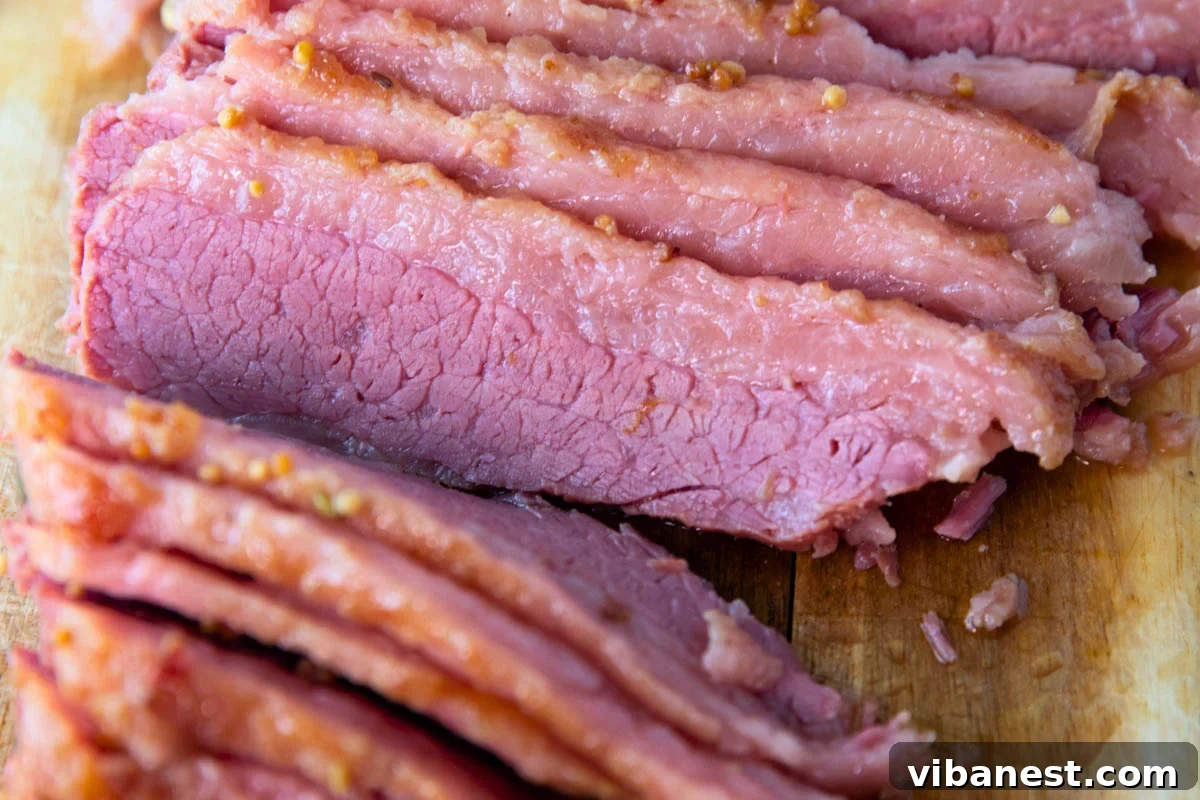
- Slice Against the Grain: After resting, slice the corned beef against the grain. This is a vital technique for maximizing tenderness, which we’ll discuss in more detail below. Serve immediately with the tender, flavor-infused vegetables and a side of homemade horseradish sauce.
Mastering the Slice: Why Cutting Against the Grain Matters
Understanding how to properly slice corned beef is as important as the cooking process itself. Corned beef, typically made from brisket, is known for being a relatively tough cut of meat due to its long muscle fibers. To counteract this natural toughness and achieve a tender, easy-to-chew result, you must cut against the grain.
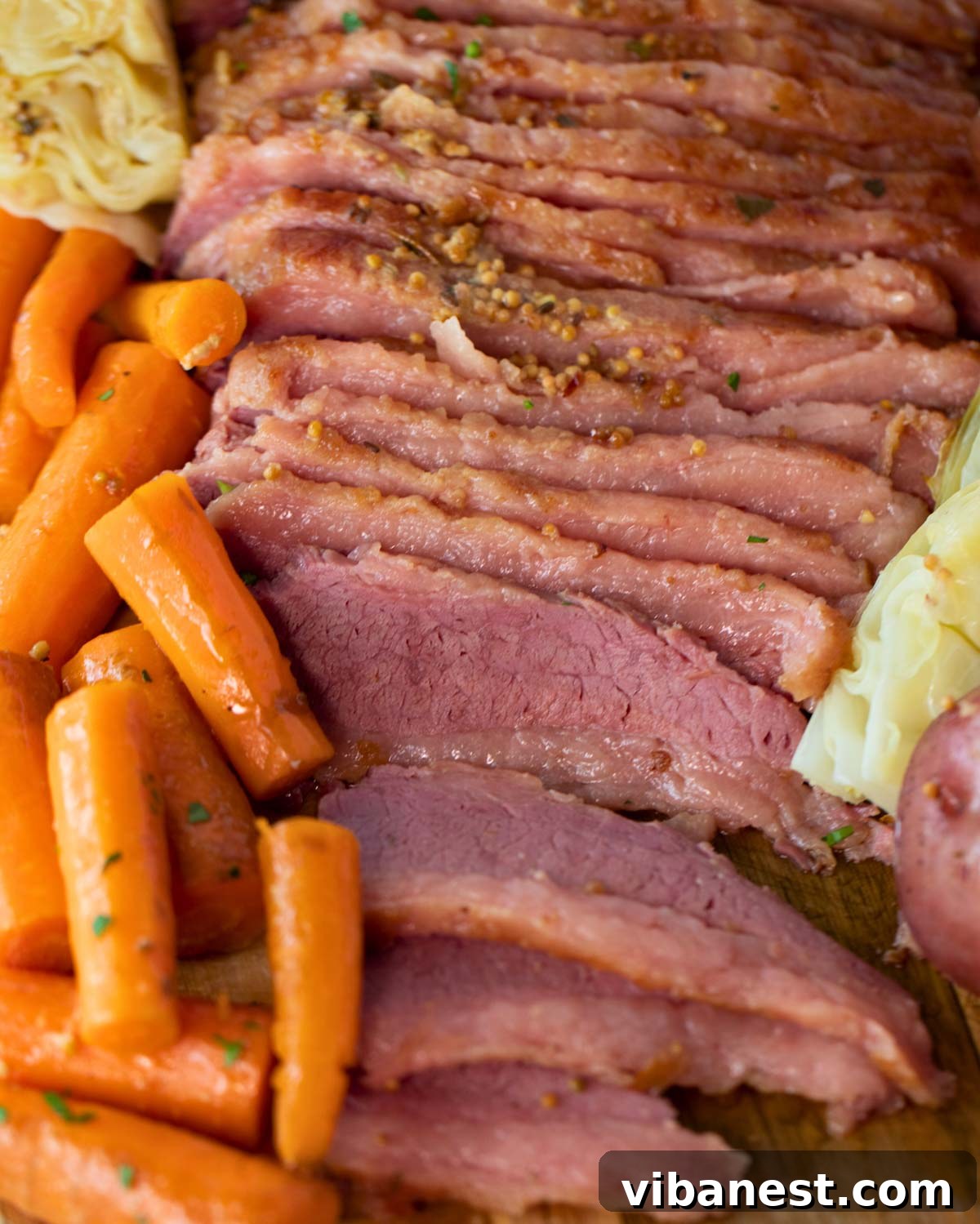
What does “cutting against the grain” truly mean? When you examine a piece of cooked corned beef, you’ll notice visible lines or striations running across the meat. These are the muscle fibers. To cut against the grain means to slice perpendicular to these fibers, effectively shortening them. Imagine these fibers as tiny, tough strings; if you cut parallel to them, you end up with long, chewy strands in each slice. However, by cutting across them, you break these long fibers into much shorter segments. This significantly reduces the amount of work your teeth have to do to break down the meat, resulting in a sensation of greater tenderness and a more enjoyable eating experience.
Before you begin slicing, take a moment to identify the direction of the grain. It might run diagonally or straight across, depending on the specific cut of brisket. Once you’ve identified it, position your knife to cut directly across those lines. This simple technique is a game-changer for any cut of meat with prominent muscle fibers, transforming a potentially chewy meal into a wonderfully tender one.
Choosing Your Brisket: Flat vs. Point and Marbling Explained
The success of your corned beef dish starts with selecting the right cut of meat. While “corned beef” broadly refers to beef preserved through salt-curing, the specific cut of beef used can significantly impact the final texture and flavor. The most common and recommended cut for corned beef is brisket, though sometimes round cuts are available.
- Brisket: This cut comes from the lower chest of the cow. It’s known for its robust flavor and is ideal for slow cooking methods. Brisket contains a good amount of connective tissue and fat, which, when cooked slowly, breaks down into gelatin, resulting in incredibly juicy and flavorful meat. Look for a brisket with good marbling (streaks of fat within the lean muscle) as this adds moisture and contributes to a richer taste.
- Round: Sourced from the leg of the cow, round cuts are much leaner than brisket. While they can be used for corned beef, they tend to be less tender and can dry out more easily during the long cooking process. For a truly superior corned beef, brisket is almost always the preferred choice.
Within the brisket cut itself, you’ll typically find two main sections:
- Flat Cut (First Cut): This is the leaner, flatter, and more uniformly shaped section of the brisket. It has a distinct layer of fat on one side that can be trimmed or left on to self-baste. The flat cut is generally easier to slice uniformly, making it excellent for presentation, especially if you’re aiming for neat, consistent slices. Its leaner nature means it benefits greatly from the moist, slow cooking environment of oven roasting.
- Point Cut (Second Cut): The point cut is thicker, less uniform in shape, and boasts significantly more marbling and fat throughout the meat. This higher fat content often translates to a richer, more intensely flavorful, and incredibly tender result when cooked correctly. Due to its irregular shape and higher fat, it might take a bit longer to become fully tender, but the payoff in taste and succulence can be remarkable.
My personal preference for this oven-roasted corned beef and cabbage recipe is a flat cut brisket. While the point cut offers incredible flavor, the flat cut’s consistent shape makes for easier slicing and a more aesthetically pleasing presentation on the plate, especially when serving it as a centerpiece for a St. Patrick’s Day dinner.
The Aromatic Blend: Understanding Corned Beef Spices
The distinctive, savory aroma and flavor of corned beef are largely attributed to the special blend of spices used during the curing process, or provided in a packet with your brisket. This combination of whole spices creates a complex profile that perfectly complements the rich beef.
The traditional spice packet typically includes:
- Whole Peppercorns: These provide a sharp, pungent heat that cuts through the richness of the beef, adding a classic peppery note.
- Coriander Seeds: Offering a warm, citrusy, and slightly sweet flavor, coriander seeds are crucial for balancing the savory and salty elements.
- Cloves: Just a hint of cloves adds a deep, sweet, and aromatic warmth, contributing to the complex spice blend. Too many can be overpowering, so they are used sparingly.
- Bay Leaves: These contribute a subtle, herbal, and slightly floral note, adding depth and a traditional “braised meat” aroma to the dish.
- Mustard Seeds: Providing a mild, earthy pungency, mustard seeds enhance the savory qualities of the beef and complement the mustard spread on the fat cap.
This blend of spices is what truly defines corned beef. If your brisket doesn’t come with a spice packet, or if you wish to enhance the flavor, you can easily create your own blend using these whole spices. Simply combine them in a small bowl and sprinkle over the mustard-coated brisket. The gentle heat of the oven allows these spices to slowly infuse into the meat and the braising liquid, creating an incredibly fragrant and flavorful final product.
A Taste of History: The True Irish-American Tradition
While corned beef and cabbage is inextricably linked with St. Patrick’s Day and Irish culture, its origins as a quintessential Irish dish are somewhat more complex than commonly believed. In Ireland, historically, pork was the more accessible and affordable meat, and the traditional celebratory meal often involved cured pork (bacon) with potatoes, not beef.
The tradition of corned beef and cabbage as we know it today largely emerged in America, brought about by Irish immigrants in the 19th century. When large waves of Irish immigrants arrived in the United States, they encountered a different culinary landscape. Beef, particularly brisket, was more readily available and less expensive than in their homeland, especially compared to the cured pork they were accustomed to. They discovered that the Jewish delis in their new neighborhoods offered a similar salted and cured beef product – corned beef – which was both affordable and reminiscent of their traditional cured meats.
Over time, as Irish-American communities grew, corned beef became a popular substitute for cured pork. Paired with cabbage, a versatile and inexpensive vegetable, it quickly became a staple in Irish-American households, especially for celebrations like St. Patrick’s Day. It was a way to honor their heritage while adapting to the resources available in their new home. Thus, what many perceive as a purely Irish tradition is, in fact, a vibrant testament to the ingenuity and cultural adaptation of Irish immigrants in America, creating a delicious and enduring culinary legacy that we celebrate every March.
Precision Cooking: Ensuring Perfectly Tender Corned Beef
Achieving the perfect corned beef isn’t just about following the steps; it’s about understanding the science behind cooking meat to ensure it’s both safe and incredibly tender. While the USDA recommends a minimum internal temperature of 145°F (63°C) for beef to be considered safe to eat, for corned beef, we’re aiming for much more than just safety – we’re after that exquisite, fall-apart tenderness that makes it a true culinary delight.
For optimal fork-tender corned beef, the sweet spot for internal temperature is typically between 180°F (82°C) and 205°F (96°C). Within this range, the connective tissues in the brisket, which are responsible for its initial toughness, have ample time to break down into gelatin. This transformation is what gives corned beef its signature succulent, shreddable texture. Personally, I find 185°F to 190°F (85°C-88°C) to be the ideal zone, delivering a perfect balance of texture and tenderness without becoming too mushy.
While a general guideline is to allow about 1 hour of cooking time per pound of meat, this is merely an approximation. Factors like oven calibration, the exact thickness of your brisket, and even the starting temperature of the meat can influence the total cooking time. This is precisely why an instant-read meat thermometer is your best friend in the kitchen. Relying solely on time can lead to undercooked or overcooked results, neither of which is desirable. Insert the probe into the thickest part of the brisket, avoiding any fat pockets, to get an accurate reading. Investing in a reliable meat thermometer will guarantee perfectly cooked corned beef every time, taking the guesswork out of your St. Patrick’s Day celebration.
Instant Read Thermometer
Cook to temperature—not by time! This is important! An instant-read thermometer is one of the most important kitchen tools that you can use for perfect results every time. Here’s what I use:
Complete Your Meal: Serving Suggestions and Homemade Horseradish Sauce
One of the many joys of this oven-roasted corned beef and cabbage recipe is the built-in convenience of its side dishes. As the corned beef slowly cooks to perfection, the tender cabbage, sweet carrots, and fluffy potatoes absorb all the delicious flavors from the braising liquid, creating a truly harmonious meal. The onions also soften and sweeten, adding another layer of depth.
While the cooked-in vegetables provide a complete meal, you can certainly elevate your spread with additional accompaniments. A rustic soda bread, often served warm with butter, makes a wonderful addition, perfect for soaking up any remaining juices. A variety of mustards, beyond what’s used on the brisket, can also offer a nice tangy contrast.
However, for a truly classic pairing that cuts through the richness of the corned beef, a zesty horseradish sauce is essential. It’s incredibly easy to make and adds a delightful kick. To prepare this flavorful sauce, you will need:
- ½ cup sour cream
- 2 tablespoons prepared horseradish (adjust to your preferred level of heat)
- 1 tablespoon Dijon mustard
- 1 tablespoon mayonnaise
- A splash of Worcestershire sauce (for added depth)
- Salt and freshly ground black pepper to taste
Simply combine all these ingredients in a small bowl and whisk until smooth. Taste and adjust seasonings as needed. For an extra touch of freshness and color, garnish with a sprinkle of chopped fresh parsley before serving. This creamy, piquant sauce is the perfect counterpoint to the rich, tender corned beef, making every bite even more enjoyable.
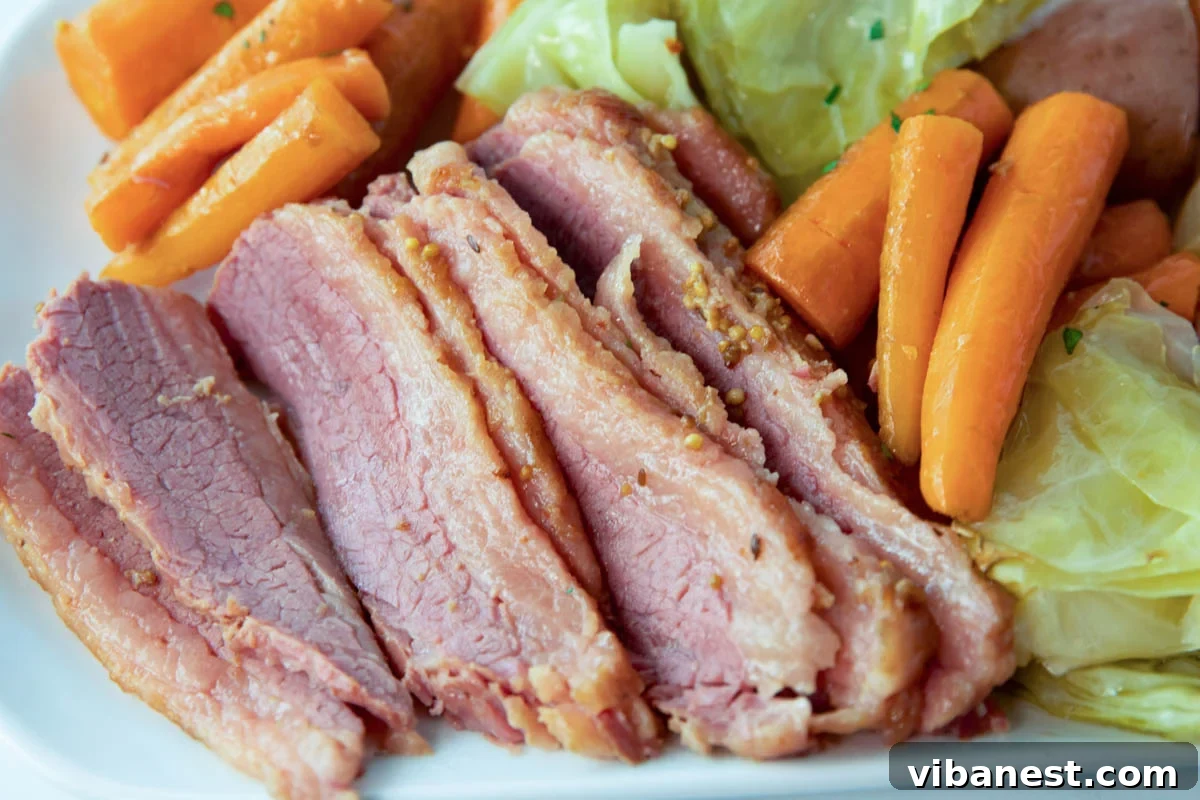
Corned Beef and Cabbage remains a beloved St. Patrick’s Day tradition, and preparing it in the oven offers an unparalleled experience in both ease and flavor. The slow roasting method ensures a deeply seasoned, incredibly tender brisket, far surpassing results from boiling. It’s a method I wholeheartedly recommend, promising a feast that will impress your family and friends.
Don’t forget that any leftover corned beef is a culinary treasure. It’s perfect for crafting classic Reuben sandwiches, adding to hashes, or incorporating into savory stews. If you’re looking for a delightful appetizer to kick off your dinner, consider our scrumptious Slow Cooker Reuben Dip!
I genuinely love hearing about your culinary adventures. If you try this oven-baked corned beef and cabbage recipe, please share your thoughts by leaving a comment below or tagging me on social media. Enjoy your delicious St. Patrick’s Day celebration!
Pin
Corned Beef and Cabbage (In the Oven)
Ingredients
- 3-4 pound corned beef brisket
- 2 tablespoons dijon mustard
- 2 tablespoons brown sugar
- 1 corned beef spice packet this comes inside the corned beef brisket package
- Guinness Beer, beef broth, or water amount will vary
- 4-5 large red potatoes cut into quarters
- 4 large carrots cut into thirds
- 1 small head of cabbage cut into wedges
Instructions
-
Preheat your oven to 325 degrees Fahrenheit (160°C). This low temperature is key for tenderizing the brisket over a longer period.
-
Thoroughly rinse the corned beef brisket under cold running water to remove any excess brine, then pat it completely dry with paper towels.
-
Place the brisket in a large Dutch oven or a deep roasting pan, ensuring the fat cap is positioned upwards. This allows the fat to render and self-baste the meat.
-
Generously spread 2 tablespoons of Dijon or yellow mustard over the entire top surface of the fat cap.
-
Sprinkle the entire contents of the corned beef seasoning packet over the mustard layer, then evenly distribute 2 tablespoons of brown sugar on top.
-
Carefully pour enough Guinness beer, beef broth, or water into the pan so that the liquid comes up about halfway along the sides of the corned beef brisket.
-
Tightly cover the Dutch oven with its lid or seal the roasting pan securely with heavy-duty aluminum foil. Bake for an initial two hours.
-
After two hours, remove the pan from the oven. Carefully arrange the quartered potatoes, carrots cut into thirds, and the cabbage and onion wedges around the brisket in the pan. Re-cover the pan and return it to the oven for an additional 90-120 minutes, or until the corned beef brisket reaches an internal temperature of around 180-190 degrees Fahrenheit (82-88°C) for optimal tenderness.
-
*Optional Step: For a beautifully browned fat cap, remove the cooked vegetables from the pan. Place the corned beef under the broiler for 3-5 minutes, watching carefully to prevent burning.
-
Remove the corned beef from the oven and let it rest, tented loosely with foil, for 10-15 minutes on a cutting board. This allows the juices to redistribute, ensuring a moist brisket. After resting, slice the corned beef into pieces, making sure to cut against the grain for maximum tenderness.
-
Serve your delicious corned beef with the tender potatoes, carrots, cabbage, and onion.
-
*Optional: Enhance your meal by serving with a creamy horseradish sauce. Refer to the “Serving Suggestions” section above for the simple recipe.