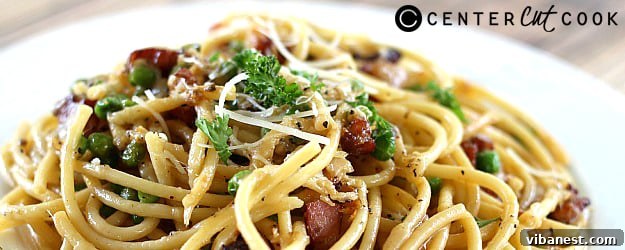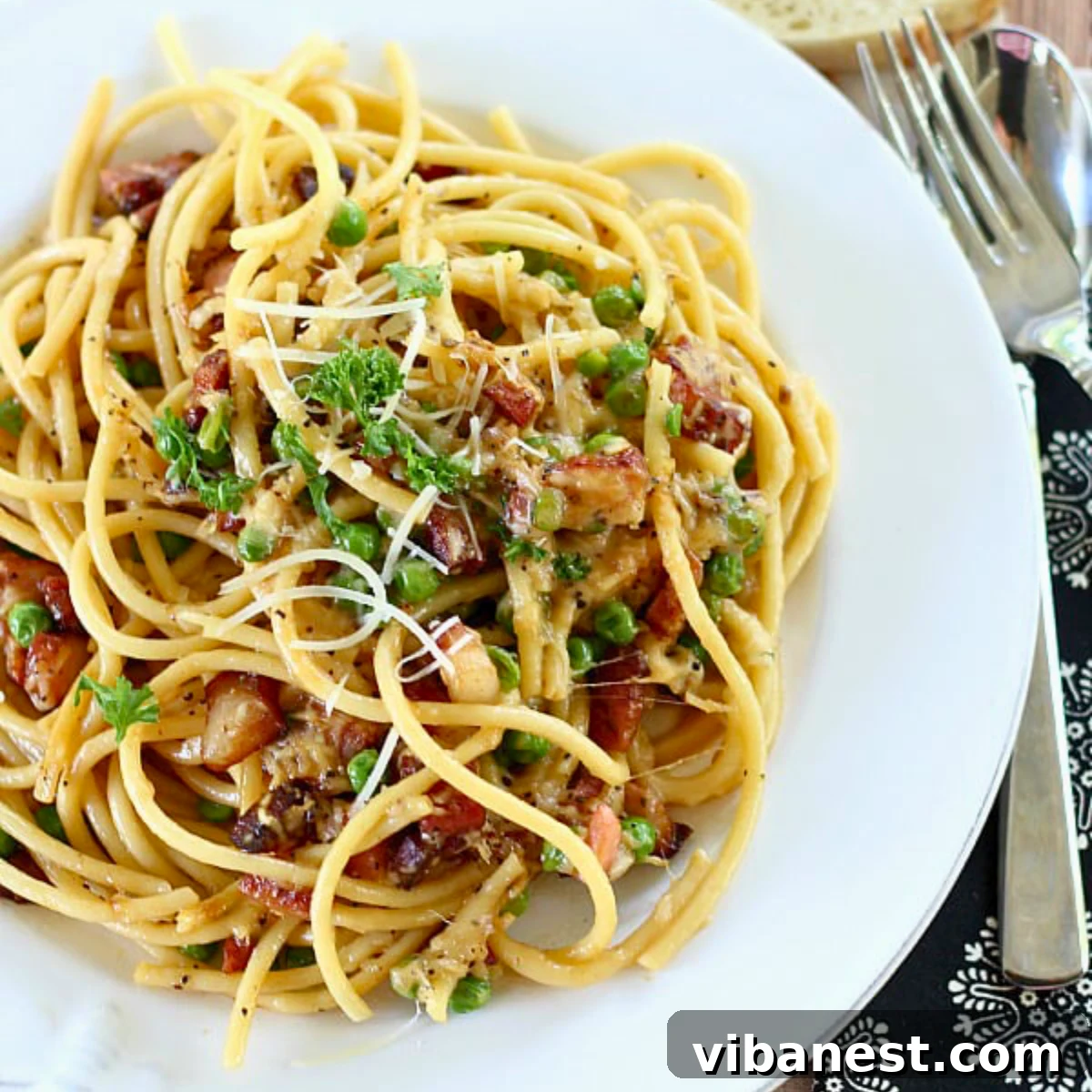
Bucatini Carbonara is a famously rich and incredibly satisfying Italian pasta dish, a true culinary delight that is absolutely worth mastering in your own kitchen. This recipe delivers a flavor profile that stands shoulder-to-shoulder with the finest carbonara I’ve savored in high-end Italian restaurants, proving that gourmet taste is easily achievable at home. Crafted from simple yet potent ingredients like savory pancetta, fresh eggs, two types of authentic Italian cheese, and fragrant herbs, it’s a timeless classic that embodies the soul of Italian cooking.
Pin this recipe to save for later!
Pin It Now
Authentic Bucatini Carbonara: A Creamy and Flavorful Italian Masterpiece
Carbonara holds a special place in the hearts of pasta lovers, often serving as a benchmark dish at Italian eateries worldwide. While many consider it a restaurant-only delicacy, the thought of recreating its magic at home can feel a tad daunting, primarily due to the delicate nature of incorporating eggs into a hot pasta sauce. Fear not! This recipe is designed to guide you through the process, ensuring the eggs gently cook into a lusciously creamy, velvety sauce without any risk of scrambling or remaining unpleasantly raw. The technique is simpler than you might imagine, and the resulting dish is truly extraordinary—a testament to the fact that authentic Italian flavors are well within your reach.
While classic spaghetti is a common choice for carbonara, opting for bucatini elevates the experience to another level. Bucatini, translating to “little holes” in Italian, is a thick, hollow spaghetti-like pasta. This unique characteristic means each strand not only offers a satisfying chew but also perfectly captures and holds onto the rich, creamy carbonara sauce within its center. That subtle extra bite and the way it embraces the sauce make every forkful an incredibly rewarding culinary adventure.
The foundation of any great Carbonara lies in its cured pork. While traditional Roman recipes call for guanciale (cured pork jowl), high-quality pancetta is an excellent and more readily available substitute. Thick-cut slab bacon can also work wonders in a pinch, lending its smoky, salty essence to the dish. The sublime combination of crispy, savory pancetta, the sharp, salty notes of Pecorino Romano, the nutty undertones of Parmigiano-Reggiano, and that glorious, silky egg sauce creates an explosion of flavor that is simply irresistible. For an optional pop of color and freshness, a handful of fresh or thawed frozen peas can be stirred in at the end. If peas aren’t your preference, feel free to omit them without compromising the dish’s integrity.
Remarkably, this exquisite dish comes together in under 30 minutes, making it an ideal choice for a weeknight meal that feels anything but rushed. Its speed and impressive flavor make it perfect for entertaining or simply treating yourself to a gourmet dinner. The key to enjoying Bucatini Carbonara at its best is to serve it immediately, ensuring you savor its fresh, tender textures and the warmth of its velvety sauce. Prepare to impress yourself and your loved ones with restaurant-quality carbonara, minus all the fuss!
Mastering Bucatini Carbonara: A Step-by-Step Guide
Crafting the perfect Bucatini Carbonara involves careful timing and technique, but it’s a process that’s incredibly rewarding. Follow these steps for a truly unforgettable meal:
1. Cook the Bucatini to Perfection
Begin by bringing a large pot of at least 6 quarts of generously salted water to a rolling boil. Add the bucatini pasta and cook according to the package directions until it reaches an al dente texture—firm to the bite but still tender. This is crucial for carbonara, as the pasta will continue to cook slightly when combined with the sauce. Before draining, reserve approximately 1/2 cup of the starchy pasta cooking water. This liquid is your secret ingredient for achieving a silky, emulsified sauce. Once the water is reserved, drain the pasta thoroughly.
2. Prepare the Pancetta or Bacon
Take your pancetta (or slab bacon, if using) and cut it into uniform 1/4-inch chunks. Setting it aside ensures it’s ready to go when you need it, streamlining your cooking process.
3. Infuse the Olive Oil with Garlic
Lightly smash three of the four garlic cloves to gently split them; set one whole clove aside for later use. Heat the extra virgin olive oil in a medium sauté pan over medium-high heat. Add the smashed garlic cloves to the hot oil and cook them until they turn a beautiful golden brown and release their fragrant aroma. This step infuses the oil with a delicate garlic flavor. Once golden, remove and discard the garlic cloves.
4. Cook the Pancetta and Deglaze
Add the prepared pancetta or bacon chunks to the garlic-infused pan. Cook over medium heat, stirring occasionally, until the pancetta begins to crisp around the edges and renders its delicious fat. Once crispy, pour in the dry white wine (or chicken broth/water) and allow it to simmer for 1–2 minutes, scraping up any browned bits from the bottom of the pan to deglaze. This adds another layer of flavor. During the last 30 seconds of simmering, add the reserved whole garlic clove to the pan for an additional aromatic touch, then remove the pan from the heat.
5. Prepare the Egg and Cheese Mixture
In a small bowl, whisk together the large eggs, freshly grated Pecorino Romano cheese, and freshly grated Parmigiano-Reggiano cheese until the mixture is completely smooth and uniform. This blend forms the luscious, creamy base of your carbonara sauce. Ensure there are no lumps of cheese.
6. Combine Pasta and Create the Creamy Sauce
Return the pan with the cooked pancetta and its rendered fat to medium heat. Add half of the reserved pasta water to the pan, then immediately toss in the hot, drained bucatini pasta. Stir and cook briefly, allowing the pasta to absorb some of the liquid and the water to reduce slightly. This process helps to build a starchy foundation for your sauce. Immediately remove the pan from the heat. This is a critical step to prevent the eggs from scrambling. Quickly pour the whisked egg and cheese mixture over the pasta, stirring constantly and vigorously with tongs or a wooden spoon. The residual heat from the pasta and the pan, combined with the reserved pasta water, will gently cook the eggs, creating a rich, creamy, and beautifully emulsified sauce that clings to every strand of bucatini. If the sauce appears too thick or dry, gradually add a tablespoon or two more of the reserved pasta water, stirring continuously until it reaches your desired consistency.
7. Incorporate Peas and Seasonings
Stir in the thawed peas (if using) and toss gently to combine them evenly throughout the pasta. Season the Carbonara generously with freshly ground black pepper. Taste the dish and adjust for salt if necessary, keeping in mind that the pancetta and cheeses already contribute a significant amount of salt.
8. Garnish and Serve Immediately
Just before serving, toss in the chopped fresh parsley. Divide the hot Bucatini Carbonara into individual serving bowls. For a final flourish, garnish each bowl with a sprinkle of additional fresh parsley and, if desired, a little extra grated Pecorino Romano or Parmigiano-Reggiano. Serve immediately to enjoy the optimal flavor, creamy texture, and warmth of this truly authentic Italian dish.
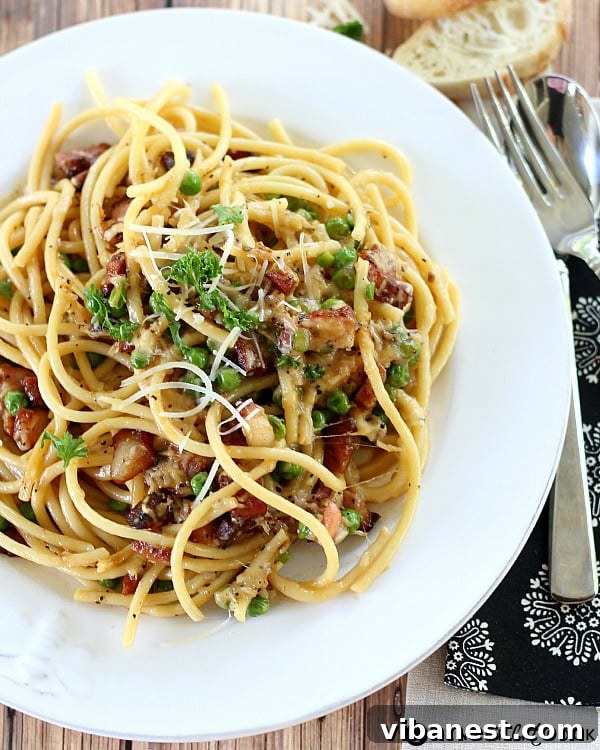
What to Serve with Bucatini Carbonara: Completing Your Italian Feast
Bucatini Carbonara is a hearty and satisfying dish on its own, but pairing it with the right accompaniments can transform it into a truly memorable Italian dining experience. Here are some delightful ideas to round out your meal:
- Appetizer: Light and Fresh Caprese Salad – A simple Caprese salad, featuring slices of fresh mozzarella, ripe tomatoes, and fragrant basil, drizzled with balsamic glaze, provides a refreshing contrast to the richness of the carbonara.
- Side: Perfect Cheesy Garlic Bread – No Italian pasta meal is complete without a side of warm, crusty garlic bread. Our recipe for perfect cheesy garlic bread is an ideal companion for soaking up any lingering sauce.
- Soup: Hearty Zuppa Toscana Soup – For a more robust meal, consider serving a comforting bowl of Zuppa Toscana. Our Olive Garden copycat recipe offers a flavorful and creamy soup that complements the pasta beautifully.
- Green Salad with Vinaigrette – A crisp green salad dressed with a light lemon vinaigrette can cut through the richness of the carbonara, offering a fresh, palate-cleansing element.
- Roasted Asparagus or Broccolini – Simple roasted vegetables, seasoned with olive oil, salt, and pepper, add a touch of green and earthy flavors without overpowering the main dish.
This Bucatini Carbonara recipe is truly the perfect dish to impress your dinner guests or simply indulge yourself in a luxurious homemade meal. And, just in case you’re exploring other fantastic pasta options, our recipe for Spicy Chicken Rigatoni is another excellent choice for a flavorful pasta adventure!
Bucatini Carbonara Recipe
This comprehensive recipe guide will help you create an authentic and delicious Bucatini Carbonara, showcasing a perfect balance of savory, cheesy, and creamy flavors.
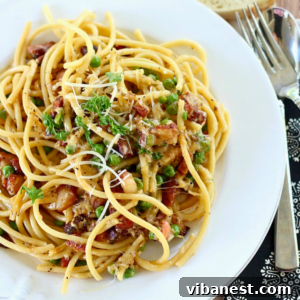
Bucatini Carbonara is a famously rich and special pasta dish, well worth trying at home. It is easy to make, with flavor that matches the best carbonara I’ve had at any fine dining restaurant.
Prep Time: 5 minutes
Cook Time: 20 minutes
Ingredients
- ½ pound pancetta, cut as a single ½-inch-thick slice, or good slab bacon cut in the same manner
- 4 garlic cloves, divided
- 3 tbsp extra virgin olive oil
- ¼ cup dry white wine, or chicken broth or water
- 2 large eggs
- ¼ cup freshly grated Pecorino Romano cheese
- ½ cup freshly grated Parmigiano-Reggiano cheese
- ½ cup fresh or frozen (thawed) peas (optional)
- Freshly ground black pepper, to taste
- 3 tbsp chopped fresh parsley, with extra for garnish
- 16 ounces bucatini pasta (may substitute regular spaghetti)
Instructions
- Cook the pasta: Bring 6 quarts of generously salted water to a boil. Add the bucatini pasta and cook until al dente, following the package instructions. Reserve ½ cup of the starchy cooking water, then drain the pasta.
- Prepare the pancetta or bacon: Cut the pancetta or bacon into ¼-inch chunks and set aside.
- Sauté the garlic: Lightly smash three garlic cloves to split them; reserve one whole clove for later. Heat the olive oil in a medium sauté pan over medium-high heat. Add the smashed garlic cloves and cook until golden brown and fragrant. Remove and discard them, leaving the infused oil.
- Cook the pancetta or bacon: Add the pancetta or bacon to the pan and cook until it begins to crisp around the edges. Stir in the wine (or broth/water) and let it simmer for 1–2 minutes, scraping any browned bits from the pan. Add the reserved whole garlic clove during the last 30 seconds of simmering, then remove the pan from the heat.
- Mix the eggs and cheeses: In a small bowl, whisk together the eggs, Pecorino Romano cheese, and Parmigiano-Reggiano cheese until the mixture is smooth and well combined.
- Combine pasta and sauce: Return the pan with the pancetta to medium heat. Add half of the reserved pasta water, then toss in the cooked bucatini. Stir and cook briefly until the water reduces slightly and begins to coat the pasta. Remove the pan from the heat immediately. Quickly pour in the egg and cheese mixture, stirring constantly and vigorously to create a creamy, emulsified sauce without scrambling the eggs. The residual heat from the pasta and pan will gently cook the eggs. If the sauce is too thick, thin it with a bit more reserved pasta water, adding it a tablespoon at a time until the desired consistency is reached.
- Add peas and seasonings: Stir in the thawed peas (if using) and toss to combine. Season generously with freshly ground black pepper. Taste and adjust for salt if needed, remembering the pancetta and cheeses are already salty.
- Garnish and serve: Just before serving, toss in the chopped parsley. Divide the Bucatini Carbonara into serving bowls and garnish with additional fresh parsley and a sprinkle of extra cheese, if desired. Serve immediately for the best flavor and texture.
Tried this recipe?
Mention @CenterCutCook and tag #CenterCutCook!
Recipe adapted from
Essentials of Classic Italian Cooking