
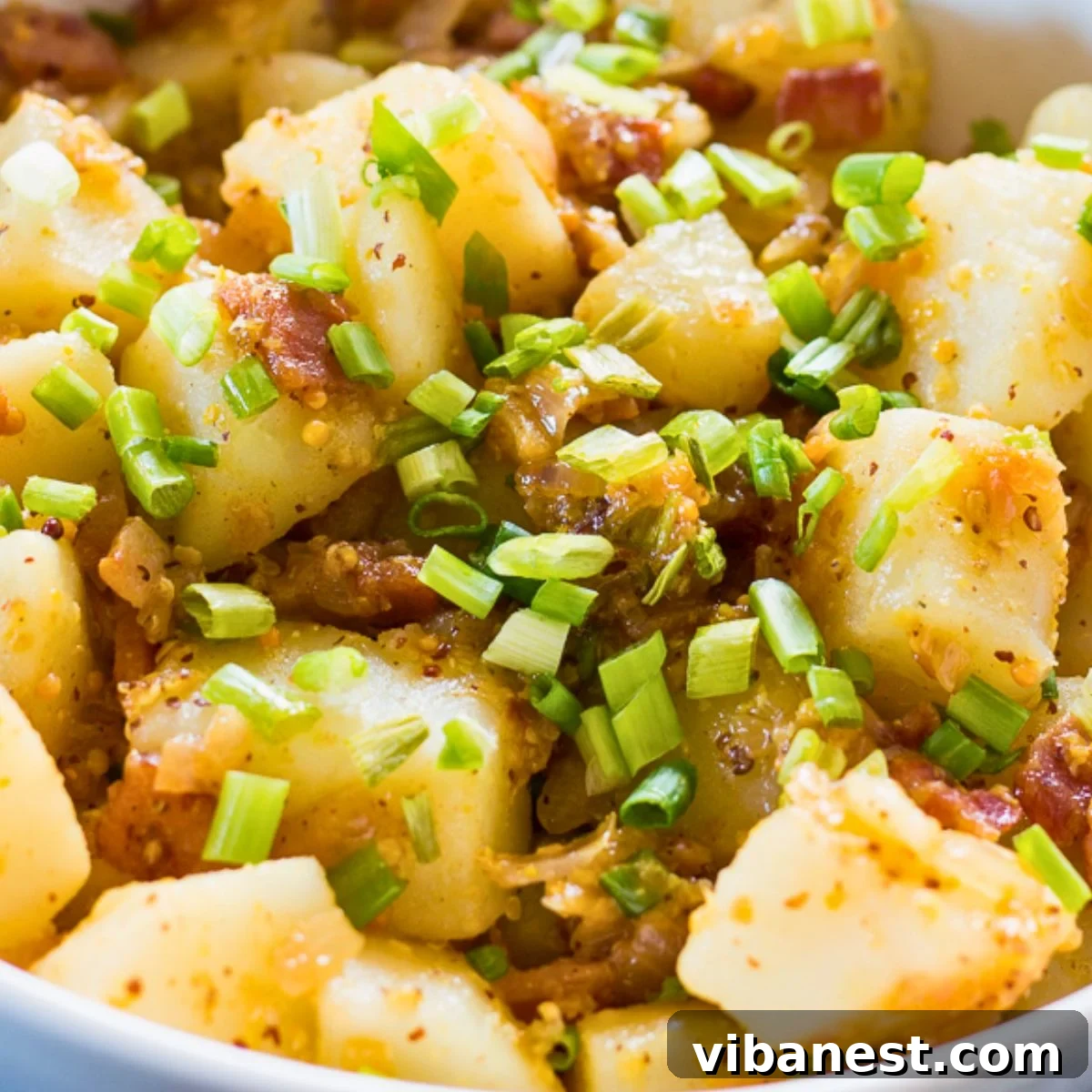
Old-Fashioned German Potato Salad: A Tangy, Warm Comfort Food Classic
There are some dishes that transcend mere recipes, becoming cherished family traditions and instant triggers for warm memories. For many, a classic German Potato Salad is precisely that kind of dish. It conjures images of vibrant summer BBQs, festive holiday meals, or cozy dinners at Grandma’s house – a true taste of home. My own Grandma, bless her heart, crafted the most unforgettable German Potato Salad, a masterpiece of tender potatoes and savory bacon bathed in a perfectly balanced, tangy vinegar-based dressing. Her secret? A magical touch, as she never measured a single ingredient!
This recipe captures the essence of that timeless flavor profile, bringing together perfectly cooked potatoes, crispy bacon, and a wonderfully sharp dressing that’s utterly irresistible. It’s a warm, comforting side dish that stands out from mayonnaise-based potato salads, offering a delightful twist that’s both familiar and exciting. Get ready to create new memories with this incredible, old-fashioned German Potato Salad. I truly hope you enjoy it as much as I do!
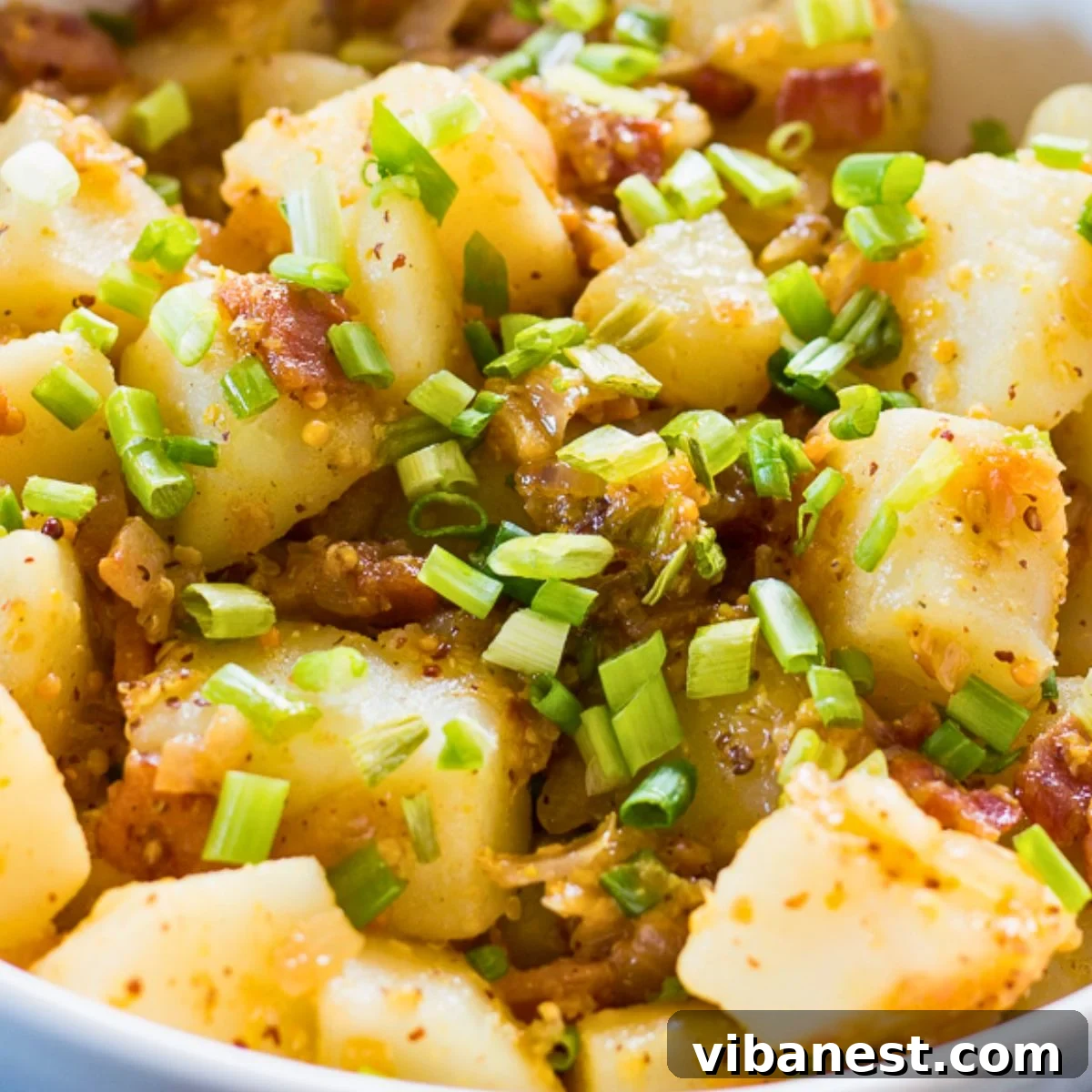
What Makes German Potato Salad So Special?
Unlike its creamy, mayonnaise-laden American cousin, German Potato Salad offers a vibrant, piquant experience. It’s characterized by a warm, vinegar-based dressing that beautifully coats tender potatoes, often complemented by the smoky, salty crunch of bacon and the sharp bite of onions. This delightful combination results in a salad that is both hearty and refreshing, making it a versatile side dish perfect for any occasion, from casual backyard cookouts to elegant holiday feasts.
Why You’ll Love This Old-Fashioned German Potato Salad Recipe
- A Taste of Tradition: This recipe brings an authentic, traditional flavor that evokes a sense of nostalgia and homestyle cooking.
- Irresistibly Tangy: The vinegar-based dressing provides a bright, zesty contrast to the richness of the potatoes and bacon.
- Warm & Comforting: Served warm, this salad offers a comforting experience, especially on cooler days or as a hearty side.
- Crowd-Pleaser: Its unique flavor profile makes it a standout dish that guests will ask for again and again.
- Easy to Master: With clear, simple steps, even novice cooks can achieve a delicious and impressive result.
- Versatile Pairing: It complements a wide array of main courses, from grilled meats to classic German fare.
Essential German Potato Salad Ingredients: A Deep Dive
Creating an authentic, old-fashioned German Potato Salad hinges on a few crucial ingredients, each playing a vital role in achieving that beloved traditional taste. Specific quantities for each ingredient are thoughtfully detailed in the comprehensive recipe card further down the page. Here’s a closer look at what you’ll need and why:
- Potatoes: The foundation of our salad! For the best texture, opt for waxy yellow potatoes like Yukon Golds. Their firm flesh holds up well to boiling without becoming mushy, and they readily absorb the tangy dressing. Red potatoes are another excellent waxy choice. While a standard Russet potato can be used, be mindful that they tend to be starchier and may break down more easily. Regardless of your choice, remember to liberally salt the water when cooking the potatoes; this is key to seasoning them from the inside out and enhances their overall flavor.
- Bacon: While it is possible to make German Potato Salad without bacon (see our variation notes below), bacon is truly a classic and highly recommended ingredient. Its smoky, salty flavor is a perfect counterpoint to the tangy dressing, and, perhaps most importantly, the rendered bacon drippings are indispensable. These drippings form the flavorful base of our dressing, infusing it with an incredible depth that cannot be replicated. Choose a good quality, thick-cut bacon for the best results.
- Onions: For a fresh, mild onion flavor, I typically use green onions (scallions), incorporating both the white and light green parts. However, thinly sliced red onion can also be used for a slightly sharper, more pungent flavor and a beautiful pop of color. Whichever you choose, the onions add a crucial aromatic element to the dressing.
- Vinegar: The hallmark of German Potato Salad is its distinctive tangy, vinegar-based dressing. My personal preference is white vinegar for its clean, crisp acidity that allows other flavors to shine. Alternatively, apple cider vinegar offers a slightly fruitier, mellower tang that is equally delicious and authentic. Experiment to find your preferred balance!
- Stone Ground Mustard & Sugar: These two ingredients are vital for rounding out the tangy dressing, creating a harmonious blend of flavors. Stone ground mustard or Dijon mustard provides a complex, savory depth and a subtle spicy kick. The addition of just a little bit of sugar is essential; it balances the tartness of the vinegar, preventing the dressing from being overly sharp and creating a more palatable, well-rounded profile.
- Salt and Pepper: Simple yet essential. These foundational seasonings allow you to adjust the flavor of the salad to your exact liking, ensuring every bite is perfectly seasoned. Always taste and adjust as you go!
Step-by-Step Preparation: Crafting Your German Potato Salad
Follow these detailed steps to bring your old-fashioned German Potato Salad to life. Precision in each stage ensures a perfect balance of flavors and textures.
- Boil the Potatoes: Start by preparing your potatoes. Peel them and cut them into uniform, bite-sized pieces. Place the potato cubes in a large pot and cover them with cold water. Crucially, add about 1 tablespoon of salt to the water. Salting the water seasons the potatoes as they cook, imparting flavor from within. Bring the water to a boil, then reduce heat and simmer until the potatoes are fork-tender but not mushy. Overcooked potatoes will fall apart in your salad. Drain them thoroughly and set aside, allowing them to cool slightly while you prepare the other components.
- Cook the Bacon: Take your bacon strips and use kitchen scissors or a sharp knife to cut them into small, bite-sized pieces (laron size). Place the diced bacon in a large skillet over medium heat. Cook the bacon, stirring occasionally, until it is beautifully golden brown and crispy. Once cooked, use a slotted spoon to remove the crispy bacon bits from the pan, transferring them to a paper towel-lined plate to drain excess fat. Do not discard the bacon drippings left in the pan – these are the flavorful foundation for our dressing!
- Make the Tangy Dressing: With the bacon drippings still in the pan, return it to medium heat. Add your diced green onions (or thinly sliced red onion) to the drippings and sauté for 2-3 minutes, just until they soften slightly and become fragrant. Next, whisk in the stone ground or Dijon mustard, vinegar, and granulated sugar. Bring this mixture to a quick boil, then reduce the heat to a gentle simmer. Allow the dressing to cook for a few minutes, stirring occasionally, until it has slightly thickened and reduced by about half. This concentration of flavor is key to a robust dressing.
- Combine and Adjust Seasoning: Once your dressing has reduced, remove the pan from the heat. Add the warm, cooked potatoes and the crispy bacon bits back into the pan with the dressing. Gently toss everything together, ensuring the potatoes are evenly coated with the tangy dressing. Taste the salad and adjust the seasonings as needed. Add salt and black pepper to taste – remember, the potatoes were already seasoned, so add salt incrementally.
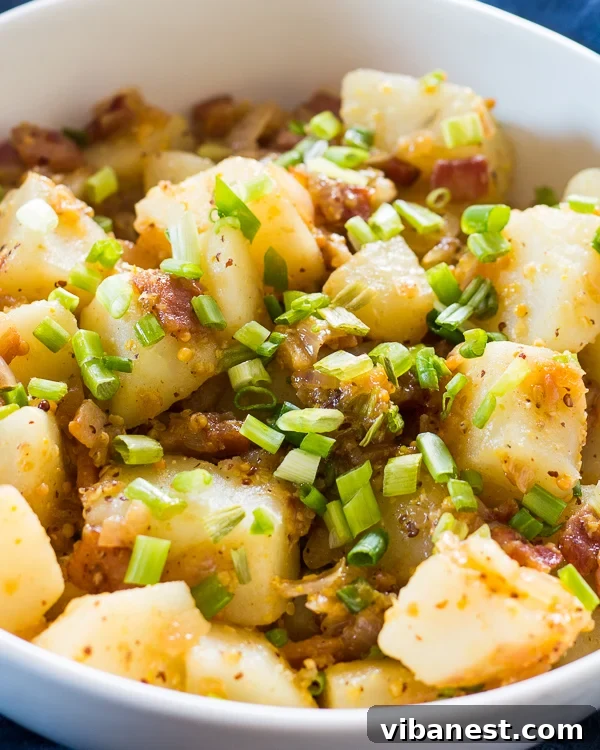
The Rich History and Origins of German Potato Salad
The story of German Potato Salad stretches back centuries, with its roots firmly planted in 18th-century Germany. Potatoes themselves were gradually integrated into European diets after their introduction from the Americas, eventually becoming a staple, particularly in colder climates. In Germany, potatoes became a cornerstone of many regional cuisines, and it was only natural for them to find their way into salads.
Unlike many creamy potato salads popular elsewhere, traditional German potato salad developed a distinct character owing to its vibrant, vinegar-based dressing. This style likely evolved from a need for preserving food and using readily available ingredients like vinegar and rendered fats. Regional variations are abundant across Germany, reflecting local agricultural practices and culinary preferences. In the southern regions, particularly Bavaria and Swabia, potato salad is most often served warm or at room temperature, embracing a lighter, oil-and-vinegar dressing, often with bacon, broth, and herbs. In contrast, northern German versions might sometimes incorporate mayonnaise or yogurt, reflecting different historical influences and tastes. This recipe, with its warm, tangy profile and bacon, is deeply rooted in the beloved traditions of southern German cuisine.
Serving German Potato Salad: Perfect Pairings
The beauty of this warm German Potato Salad lies in its incredible versatility. It makes an outstanding side dish for almost any meal, but it truly shines when paired with specific dishes. Here are some of my favorite ways to serve it:
- BBQ Feasts: It’s a stellar addition to any barbecue spread, offering a refreshing contrast to grilled meats. I particularly love serving it alongside classic American BBQ staples like grilled chicken, ribs, or burgers. Pair it with other popular BBQ sides like Easy Macaroni Salad or Hawaiian Macaroni Salad and a crisp coleslaw for a complete meal. While I adore classic potato salad, this warm German rendition is always a crowd-pleaser and a delightful surprise for guests!
- Traditional German Cuisine: For a truly authentic experience, serve it alongside traditional German dishes. It’s a perfect accompaniment to savory schnitzel (pan-fried cutlets), various types of sausages (Bratwurst, Knockwurst, etc.), or roasted pork loin.
- Holiday Gatherings: Its comforting warmth makes it an excellent choice for Thanksgiving, Christmas, or Easter dinners, adding a unique side dish to the festive spread.
- Casual Weeknight Dinners: Don’t reserve this salad just for special occasions! It pairs wonderfully with simple weeknight meals like roasted chicken, pan-seared fish, or pork chops.
Expert Tips for the Best German Potato Salad
- Don’t Overcook Potatoes: Boil potatoes until fork-tender, but stop before they become mushy. They need to hold their shape when tossed.
- Salt the Potato Water: This is crucial for seasoning the potatoes from the inside out, building a foundational flavor.
- Dress Potatoes While Warm: Warm potatoes are more porous and will absorb the tangy dressing much better, infusing every bite with flavor.
- Render Bacon Properly: Cook bacon until crispy and ensure you save those flavorful drippings for the dressing base.
- Taste and Adjust: Always taste the dressing and the finished salad, adjusting salt, pepper, or a pinch more sugar or vinegar until it hits your perfect balance.
- Rest for Flavor: While delicious immediately, allowing the salad to rest for 15-30 minutes (or even longer if serving cold) lets the flavors meld beautifully.
Delicious Variations to Explore
This old-fashioned German Potato Salad recipe is a classic for a reason – the core flavor combination of tender potatoes, savory bacon, and a tangy vinegar dressing is hard to beat. However, the beauty of cooking lies in customization! Here are a few delightful variations you can try to tailor this dish to your preference:
- Without Bacon (Vegetarian Option): While I wholeheartedly believe that bacon adds an irreplaceable depth of flavor, this salad can certainly be made without it for a vegetarian version. To adapt the recipe, simply omit the bacon. Instead, heat 2 tablespoons of olive oil or canola oil in the skillet. Use this oil to sauté the green onions, then proceed with the dressing instructions as written. You can also add a pinch of smoked paprika to the dressing for a subtle smoky hint.
- Different Onions: As written, this recipe calls for fresh green onions for a mild and crisp flavor. For a bolder, more pungent kick, try using thinly sliced red onion. If you prefer a milder, sweeter onion flavor, finely dicing and sautéing a yellow onion until translucent before adding the other dressing ingredients can also be a wonderful choice.
- Alternate Vinegars: While white vinegar offers a crisp tang, experimenting with other vinegars can subtly change the flavor profile. Apple cider vinegar provides a slightly fruitier and mellower acidity. For a richer, more complex tang, consider using red wine vinegar. Each will lend a unique character to your dressing.
- Add Fresh Herbs: Elevate the freshness by stirring in finely chopped fresh herbs just before serving. Parsley, chives, or dill are excellent choices that complement the potatoes and tangy dressing beautifully.
- Spice It Up: For those who enjoy a little heat, a pinch of red pepper flakes can be added to the dressing while it simmers, or a dash of hot sauce when adjusting seasonings.
- Sweetener Options: If you prefer a slightly different sweetness profile, you can substitute granulated sugar with a touch of maple syrup or honey in the dressing. Start with a small amount and taste as you go.
Common Questions About German Potato Salad
Yes, absolutely! To prepare German Potato Salad without bacon, simply omit the bacon. Instead of bacon drippings, heat 2 tablespoons of olive oil or canola oil in a skillet. Use this oil to sauté the green onions until softened, then continue with the recipe instructions for making the tangy dressing.
Waxy potatoes are generally preferred because they hold their shape better when boiled and absorb the dressing well. Yukon Gold or red potatoes are excellent choices. While Russet potatoes can work, they tend to be starchier and might become mushy if overcooked.
German Potato Salad is traditionally served warm, but it can also be enjoyed at room temperature or chilled. If making ahead, refrigerate it once cooled. The flavors will continue to meld as it sits. If serving warm later, gently reheat it on the stovetop over low heat, adding a splash of broth or water if it seems too dry.
Store any leftover German Potato Salad in an airtight container in the refrigerator for up to 3-4 days. It’s best to enjoy it within this timeframe for optimal freshness and flavor.
MORE POTATO SALAD RECIPES TO TRY
If you’re a true potato salad aficionado, or just looking to expand your repertoire of delicious side dishes, I’ve got you covered! Here are some of my personal favorite potato salad recipes, each with its own unique twist, that I highly recommend you try:
Roasted Potato Salad
Classic Potato Salad
Loaded Baked Potato Salad
I genuinely hope you take the time to prepare and savor this delightful old-fashioned German Potato Salad recipe. It’s more than just a side dish; it’s a taste of tradition, comfort, and pure culinary joy. If you give this recipe a try, please don’t hesitate to leave a comment below and share your experience, or tag me on social media – I absolutely love hearing from you and seeing your delicious creations! Enjoy every warm, tangy, and bacon-filled bite!

Pin
German Potato Salad
Ingredients
- 2 pounds potatoes (Yukon gold or Russets) peeled, cleaned and cut into bite sized pieces
- 1 tablespoon salt
- 6-8 strips bacon diced
- 1 onion diced
- 2 tablespoons stone ground mustard or dijon mustard
- 1/2 cup white vinegar or apple cider vinegar
- 1/2 cup green onions chopped
- 1 tablespoon granulated sugar
- salt and black pepper to taste
Instructions
-
Add cubed potatoes to a large pot and cover with cold water. Add 1 tablespoon salt to the pot, then boil potatoes until they are fork tender. Drain potatoes and set aside.
-
In a pan cook bacon until golden brown. Remove the bacon with a slotted spoon reserving the fat in the pan.
-
Add onions to the bacon fat and saute for 2-3 minutes until just cooked.
-
In the same pan, add mustard, vinegar and sugar. Bring this to a quick boil and simmer for a few minutes until the sauce reduces to half.
-
Switch off the flame, and add bacon, potatoes and green onions to the pan and toss well. Season to taste with salt and black pepper.
-
Transfer the salad to a bowl and serve warm. If you prefer, you can refrigerate for 2-3 hours and serve cold.