
Want to prevent apples, bananas, and other fruits from turning brown? It only takes one simple ingredient!
It’s a universally frustrating kitchen dilemma: you meticulously slice up some beautiful, ripe fruit, only to witness it rapidly transform into an unappetizing brown mess within minutes. This common occurrence, known as enzymatic browning, can quickly diminish the visual appeal and freshness of a vibrant fruit salad, a nutritious snack, or a carefully packed lunch. For many years, I assumed that everyone was aware of the easy, incredibly effective trick to keep cut fruits like apples, bananas, and even pears looking pristine and perfectly fresh. However, as I’ve recently discovered, this little secret I’ve relied on isn’t as widely known as I once thought, despite its remarkable simplicity.
Imagine the convenience of being able to prepare a generous batch of sliced apples or bananas and confidently store them in your refrigerator for several days, without any concern of them losing their vibrant color or appealing texture. This powerful, natural method makes that a reality. While it’s generally best to enjoy certain fruits immediately after they’ve been cut to maximize their flavor and nutritional benefits, mastering the art of preventing fruit from turning brown is an absolute game-changer for efficient meal prepping, hosting elegant gatherings, and significantly reducing unnecessary food waste in your home.
Why Does Fruit Turn Brown? Understanding the Science of Enzymatic Browning
To truly appreciate the effectiveness of our simple solution, it’s beneficial to first grasp the underlying reason why certain fruits undergo browning. The primary culprit behind this undesirable transformation is a natural biochemical process called enzymatic browning, often referred to as oxidation. When fruits susceptible to this process are sliced, bruised, or otherwise damaged, their internal cells rupture. This damage exposes specific enzymes, primarily polyphenol oxidase (PPO), to oxygen present in the surrounding air. These PPO enzymes then react with naturally occurring phenolic compounds within the fruit, initiating a chemical cascade that results in the formation of brown pigments, known as melanins.
This browning reaction is an entirely natural and completely harmless process from a health standpoint. However, it significantly detracts from the fruit’s visual appeal, making it less enticing and enjoyable to consume. Fruits that are particularly prone to rapid browning include popular choices like apples, bananas, pears, peaches, nectarines, and avocados. The rate at which this browning occurs can fluctuate based on several factors, including the specific type of fruit, its level of ripeness, and the extent of its exposure to oxygen.
The Simple Secret Revealed: Lemon Juice – Your Fruit’s Natural Guardian
The solution to effectively combating fruit browning is surprisingly straightforward and relies on just one readily available and inexpensive ingredient: lemon juice. But what makes lemon juice so remarkably effective in this context? Its power lies in a dual-action mechanism:
- High Acidity: Lemon juice is inherently acidic. The very enzymes responsible for initiating the browning process (PPO) are significantly less active and efficient in highly acidic environments. By applying lemon juice to the cut surface of the fruit, you effectively lower its pH level, creating an unfavorable condition that dramatically slows down or completely halts the enzymatic reaction.
- Rich in Ascorbic Acid (Vitamin C): Lemons are an excellent natural source of ascorbic acid, which is a potent antioxidant. Ascorbic acid plays a crucial role by preferentially reacting with oxygen molecules before the PPO enzymes even have a chance. In essence, it “sacrifices” itself to protect the fruit’s cellular integrity, thereby preventing the browning process and preserving the fruit’s natural, vibrant colors. It acts as a protective, invisible shield.
The true elegance of this method lies in its complete naturalness and undeniable simplicity. There’s no need for any specialized kitchen equipment, complex chemical solutions, or extensive preparation. A mere squeeze or a light drizzle of lemon juice is genuinely all it takes to maintain your fruit’s fresh appearance, making it consistently look appetizing and inviting.
How to Prevent Fruit from Turning Brown: Your Easy Step-by-Step Guide
Here’s the incredibly straightforward and highly effective method I personally use to keep all my sliced fruit looking vibrantly fresh for multiple days. This technique is perfectly suited for various applications, whether you’re engaging in efficient meal prepping, packing healthy school or work lunches, or artfully arranging impressive fruit platters for your cherished guests.
No ratings yet. Be the first to rate this!
Pin this Tip to Pinterest
Print this Guide
How to Prevent Fruit from Turning Brown: A Practical Method
Keep your sliced apples, bananas, and other susceptible fruits from turning brown with this incredibly simple, one-ingredient method that uses natural lemon juice!
Ingredients You’ll Need
- Sliced Fruit: Select any fruits that are prone to browning once cut, such as crisp apples, ripe bananas, juicy pears, sweet peaches, delicate nectarines, or creamy avocados.
- Lemon Juice: You can use either freshly squeezed lemon juice for maximum flavor or convenient bottled lemon juice; both are equally effective for this purpose.
Detailed Instructions for Fruit Preservation
- Thoroughly Prepare Your Fruit: Begin by slicing your chosen fruit into your preferred shapes – whether that’s neat wedges, perfect rounds, or uniform cubes. It’s advisable to work relatively quickly during this step to minimize the initial exposure of the cut surfaces to oxygen.
- Evenly Apply Lemon Juice: Transfer all your freshly sliced fruit into a clean mixing bowl. Drizzle a small, controlled amount of lemon juice directly over the fruit. There’s no need for hyper-precise measurements; typically, about one to two tablespoons of lemon juice is ample for a medium-sized bowl of fruit. The primary objective is to ensure that all cut surfaces are lightly, but thoroughly, coated.
- Gently Toss to Ensure Coating: With clean hands or a soft spatula, gently toss the fruit in the bowl. This action ensures that every single piece is uniformly coated with the lemon juice. You will likely observe a subtle, slightly glossy sheen appearing on the fruit’s surface once it’s adequately covered.
- Proper Storage for Optimal Freshness: For maximum preservation and extended freshness, cover the treated fruit tightly. The best method is to use plastic wrap, pressing it directly onto the surface of the fruit to eliminate as much trapped air as possible. Alternatively, you can place the fruit in an airtight container with a secure lid. Store the container in your refrigerator until you are completely ready to enjoy your vibrant, fresh fruit.
Essential Tips for Best Results & Maximizing Fruit Freshness
To get the most out of this browning prevention technique and ensure your fruit stays as fresh as possible, consider these additional tips:
- Don’t Overdo the Lemon Juice: While lemon juice is your key ally, using an excessive amount can impart a strong, sometimes overpowering, lemony flavor to your fruit. Aim for just enough to lightly coat the surfaces without drenching them.
- Consider the Fruit Type: This method is most effective for fruits that are highly susceptible to enzymatic browning, such as apples, bananas, and pears. More delicate berries (like strawberries or blueberries) or juicy melons (like watermelon or cantaloupe) generally do not brown in the same manner and typically don’t require this specific treatment.
- Minimize Air Exposure: Even with the lemon juice treatment, minimizing contact with air during storage is paramount. Always utilize truly airtight containers or press plastic wrap firmly against the fruit’s surface to create a barrier against oxygen.
- Serve and Store Chilled: Cold temperatures naturally help to slow down enzymatic reactions. Therefore, consistently storing your treated fruit in the refrigerator is highly beneficial for extending its freshness and preventing browning.
- Work Quickly: The faster you apply the lemon juice after cutting, the better. Reducing the initial exposure time to oxygen before the protective layer is applied will yield superior results.
Exploring Other Natural Methods to Prevent Fruit Browning
While lemon juice remains my top recommendation for its effectiveness and accessibility, there are several other natural ingredients you can employ to prevent fruit from turning brown. Each offers its own set of advantages and potential flavor impacts:
- Lime Juice: Functioning very similarly to lemon juice, lime juice is also highly acidic and rich in ascorbic acid. It serves as an excellent substitute, though it might impart a slightly distinct citrus flavor to your fruit.
- Orange Juice or Pineapple Juice: These fruit juices also contain beneficial citric and ascorbic acids. While they may be slightly less potent than pure lemon juice, they can still be effective, especially for fruits where a subtle hint of their particular flavor would be welcome. Pineapple juice, in particular, contains an enzyme called bromelain, which can further help to inhibit browning enzymes.
- Citric Acid Powder: This is a concentrated, crystalline form of the acid naturally found in citrus fruits. A very small pinch of citric acid powder, dissolved in a little water and then tossed with your fruit, can be exceptionally effective. When used sparingly, it tends to have a more neutral flavor profile compared to direct fruit juices.
- Vinegar (White or Apple Cider): Vinegar is undeniably highly acidic and will certainly prevent browning. However, its strong, pungent flavor can very easily overwhelm the delicate taste of most fruits. If you opt for this method, use it with extreme caution and in minuscule amounts, and carefully consider if the resulting flavor is acceptable for your intended dish.
- Salt Water (Brief Dip): A very dilute salt solution (approximately ½ teaspoon of table salt dissolved in one cup of water) can be used for a quick, brief dip. The salt helps to draw out some moisture and can interfere with certain enzyme activities. However, it is crucial to rinse the fruit thoroughly with fresh water afterward to prevent any undesirable salty taste, and this method is generally less reliable than acidic solutions for prolonged browning prevention.
- Club Soda or Sparkling Water: The carbonation and mild acidity present in club soda or sparkling water can offer some protective benefits, but this method is typically less effective than using citrus juices. Its primary mechanism is often attributed more to displacing oxygen from the fruit’s surface.
Ultimately, each of these methods works by either effectively lowering the pH level (increasing acidity) on the fruit’s surface or by providing potent antioxidants (like Vitamin C) that actively block the oxidation process. Feel free to experiment with different approaches to discover which method and flavor profile you personally prefer for various types of fruit.
Creative Fruit Display Ideas to Inspire You
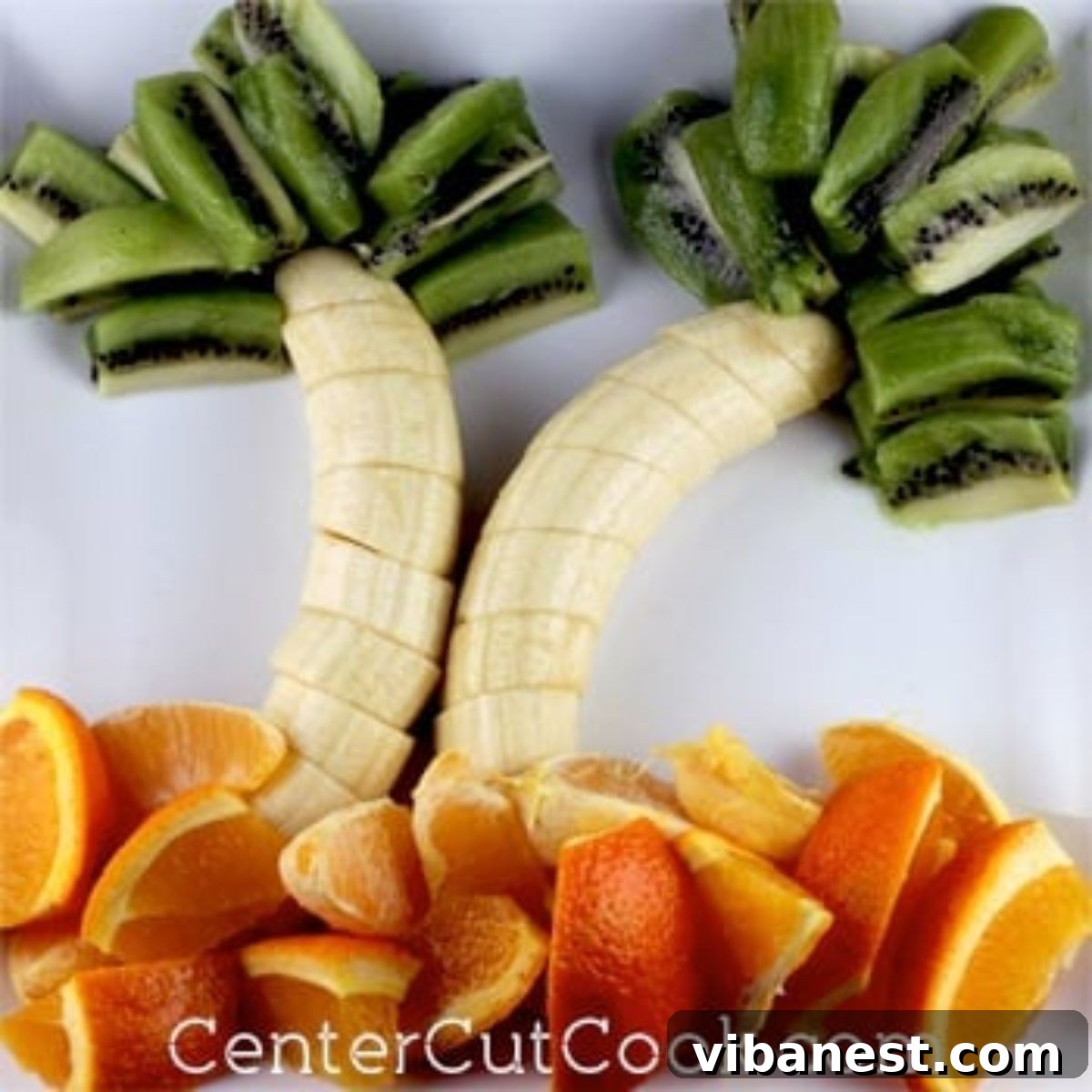
Beyond the practical necessity of preventing browning, fresh fruit also offers incredible potential for stunning visual displays and creative presentations. I vividly recall encountering an utterly adorable and ingenious idea on Pinterest some time ago, which transformed a simple fruit arrangement into a charming tropical scene, complete with miniature palm trees and sandy beaches made entirely from fruit. While I regrettably haven’t been able to locate the original creator to give proper acknowledgment, the concept itself was brilliantly executed and surprisingly easy to recreate!
If you’re inspired to craft a similar piece of edible art, you would typically need:
- 2 oranges, carefully sliced into rounds (to represent the “sun” and the “sandy” ground)
- 2 ripe bananas, sliced into thicker discs or halves (to form the “trunks” of the palm trees)
- 4-5 kiwi fruits, thinly sliced (for the lush, green “palm tree leaves”)
This creative example beautifully illustrates how even the most common fruits can be transformed into something truly delightful and eye-catching with just a touch of imagination. Just remember to apply your browning prevention trick, especially to the banana slices (and any apples if you decide to include them), before you begin arranging your fruit masterpiece!

Conclusion: Enjoy Fresh, Vibrant Fruit Every Single Time
It’s time to definitively say goodbye to the disappointment of unappealing brown fruit! Armed with the remarkably simple yet powerful technique of using lemon juice, you can now confidently ensure that your sliced apples, bananas, and other susceptible fruits remain beautifully fresh, vibrantly colored, and utterly delicious for significantly extended periods. This incredibly easy trick offers multiple benefits: it saves you valuable time, drastically reduces unnecessary food waste, and ultimately makes healthy eating a far more enjoyable and aesthetically pleasing experience. So go ahead, confidently prep your fruit well in advance, pack those delightful lunchboxes, and impress everyone – from friends to family – with your perfectly preserved, naturally vibrant produce.
Tried this easy fruit preservation method?
We’d love to see your fresh creations! Mention @CenterCutCook and don’t forget to tag #CenterCutCook on your social media posts!